



anyweb
-
Posts
9290 -
Joined
-
Last visited
-
Days Won
371
Everything posted by anyweb
-
does the scom server account you are using in this step have local admin rights on the computers you are trying to monitor
-

remove SCOM 2007 agents
anyweb replied to Dritan Myftiu's question in Deploy software, applications and drivers
are you sure you need to remove the agents ? why do you think they need to be removed ? have you tried removing them from the scom server ? -
image This document was created to help in troubleshooting Configuration Manager Service Pack 2 (SP2) install failures. This document is not entirely specific to Service Pack 2 and can apply to Service Pack 1 installs, upgrades from SMS 2003 to SCCM, and future service pack or Configuration Manager versions that rely on .mof file compilations, SQL SPNS, provider DLLs, etc. Contents: Section 1 Pre-Upgrade Best Practices Section 2 General Troubleshooting Section 3 List of Known Issues and Solutions: A: SPN issues with SQL B: Time Skew between remote SQL and Site Server C: Re-Registering relevant files / errors attempting to re-register needed files. D. Deleting Temp Files, setting Temp variables. E. Searching for a "bad" custom or customized report F. Checking for pre-existing duplicate reports that are new to SCCM SP2 G. Upgrade fails due to registry setting. H. Site System does not have rights to remote SQL System or Clustered SQL Nodes ______________________________ Section 1 Pre-Upgrade Best Practices It is important to note that some of the problems outlined below can leave your Configuration Manager or SMS installation in an unusable state (i.e. Admin Console will not launch and connect) this is because the upgraded files have already been copied to the bin\I386 directory of your SCCM installation. In some case setup may rollback successfully and in others you *may* be able to reinitiate upgrade over the top of a failed installation however in others you may have to fully restore to your previous state; SCCM RTM, SP1, SMS 2003, etc, to begin troubleshooting. Always insure you have a complete current and full SMS or Configuration Manager backup (performed when SMS services are disabled, all directories, SQL DB, registry settings, etc..) before upgrading your product. Always utilize the testdbupgrade setup switch on a copy(!) of the site database command to insure your database can be upgraded without error. Testdbupgrade can help you insure you are ok to upgrade however you cannot upgrade a database after you have run testdbupgrade against it. How to Test the Site Database Upgrade Process: http://technet.microsoft.com/en-us/library/bb693648.aspx ______________________________ Section 2 General Troubleshooting Most problems we have seen thus far have been after file copy, around step 4; registering the SMS provider, and compiling .mof files. It takes setup about 10-15 minutes to get to this step. This document primarily focuses on issues of this type. There are several things to consider in the scenario of .MOF comp failures. First off you should not have to keep going through SP2 setup after testing solutions. Instead try to manually compile the .mof that fails. In most (not all) cases you will get an error doing this as well. Once you have implemented a solution and can manually compile the .mof file that setup was failing on, it may be safe to assume that SCCM SP2 setup can again be run and may pass this stage. Things to look at (not necessarily in this order): * Relevant log files: C:\ConfigMgrSetup.log, %ConfigMgrInstallDir%\Logs\Smsprov.log and SMSProv.lo_, %Windir%\System32\Wbem\Mofcomp.log * Verify that DCOM and Windows Management Instrumentation (WMI) is enabled * Take a SQL Profiler (yes, because we are going through the Provider we do look in SQL. Specifically at the SMS_Reports table) * Double check WMI permissions * Check Security Rights in the SMS Admin console for the user that is executing the mofcomp command against smsrprt.mof * Verify permissions on the extnprov.dll file * We write .tmp files to various locations during compile. Run a Filemon. As stated above, the files to compile during setup should be able to compile outside of setup. it is likely that you will not be able to complete setup successfully until you can compile smsrprt.mof (or whatever mof file is failing to compile) manually successfully from a command prompt. If you try to manually compile the SMSrprt.mof and it fails you usually get the following error: E:\SMS\bin\i386>mofcomp smsrprt.mof Microsoft ® 32-bit MOF Compiler Version 5.2.3790.3959 Copyright © Microsoft Corp. 1997-2001. All rights reserved. Parsing MOF file: smsrprt.mof MOF file has been successfully parsed Storing data in the repository... An error occurred while processing item X defined on lines X - X in file smsrprt.mof: Compiler returned error 0x80041001 It may be worth noting that 0x80041001 = generic failure, so this is not helpful other than to let you know that you have not resolved your issue as of yet since you are not able to manually compile this file. ______________________________ Section 3 List of Known Issues and Solutions The most common issue we see with SP2 upgrades is a failed to compile .mof error around the time that SP2 is trying to upgrade the SMS provider component: <12-09-2009 15:17:37> CompileMOFFile: Starting to compile MOF C:\Program Files (x86)\Microsoft Configuration Manager\bin\i386\smsRprt.mof <12-09-2009 15:18:11> CompileMOFFile: Failed to compile MOF C:\Program Files (x86)\Microsoft Configuration Manager\bin\i386\smsRprt.mof, error -1 <12-09-2009 15:18:11> Setup cannot compile MOF file C:\Program Files (x86)\Microsoft Configuration Manager\bin\i386\smsRprt.mof. Do you want to continue? <12-09-2009 15:18:11> Setup failed to install SMS Provider. For more information about this error, see Microsoft Knowledge Base at <http://microsoft.com> or contact Microsoft Technical Support for further assistance. A. SPN issues with SQL: The first thing you will want to check is that the SQL SPNs are registered correct in Active Directory. In a nutshell 2 things can go wrong here: 1. Duplicate SPNs for SQL 2. SQL is running under a Domain User account and the SPNs have not been created manually. Resolution: Use the setspn tool. You can find it online if it's not installed. 1. setspn -l nameofcomputerrunningsql > C:\ComputerSPN.txt 2. setspn -l domain\accountSQLisRunningUnder > C:\SQLaccountSPN.txt 3. setspn -x > C:\duplicates.txt So if your SQL server is called sqlcomputer and the account SQL is running under is called SQLAccount number 1 and 2 above would be : 1. setspn -l sqlcomputer > C:\ComputerSPN.txt 2. setspn -l domain\sqlaccount C:\SQLaccountSPN.txt Use the txt files above to insure SQL SPNs are registered correctly. You should have the entries listed as follows under the domain account running SQL or the actual SQL Servers computer account: MSSQLSvc/sqlcomputer.domain.com:1433 MSSQLSvc/sqlcomputer:1433 If you are running a SQL cluster insure the same for all physical nodes and the virtual instance name. To add a FQDN and NETBIOS SPN for SQL use the following syntax: setspn -a MSSQLSvc/SQLcomputer.domain.com:1433 Domain\SQLaccount and setspn -a MSSQLSvc/SQLcomputer:1433 Domain\SQLaccount To delete a duplicate SPN use the -d switch: SETSPN -D MSSQLSvc/SQLcomputer:1433 Domain\SQLcomputer You can also easily view SPNs (Service Principal Names) using ADSIEDIT.msc (install from a Windows Server CD, \Support Tools\Suptools.msi) right click the computer or user account object and view attributes, scroll down to ServicePrincipalName. Note: SQL creates its OWN SPN for the computer account when SQL is running under the Local System account. Having more then one SPNs registered under different accounts with the same machine name as the one SQL is running on will cause these problems as well. Switches for SetSPN: -R = reset HOST ServicePrincipalName Usage: setspn -R computername -A = add arbitrary SPN Usage: setspn -A SPN computername -S = add arbitrary SPN after verifying no duplicates exist Usage: setspn -S SPN computername -D = delete arbitrary SPN Usage: setspn -D SPN computername -L = list registered SPNs Usage: setspn [-L] computername -Q = query for existence of SPN Usage: setspn -Q SPN -X = search for duplicate SPNs Usage: setspn -X B. Time Skew between remote SQL and Site Server: If SQL is remote from the site server you are trying to upgrade insure there is not a time skew between the two machines. A default Windows Active Directory domain has a Kerberos policy to allow no more than a 5 minute time difference between machines for successful Kerberos authentication. C. Re-Registering relevant files: In some case re-registering a couple of files has resolved SP2 install issues. Configmgrsetup.log: <11-14-2008 23:20:11> CompileMOFFile: Starting to compile MOF E:\SMS\bin\i386\smsRprt.mof <11-14-2008 23:20:12> CompileMOFFile: Failed to compile MOF E:\SMS\bin\i386\smsRprt.mof, error –2147217407 If you try to manually compile smsRprt.mof you get the following error: E:\SMS\bin\i386>mofcomp smsrprt.mof Microsoft ® 32-bit MOF Compiler Version 5.2.3790.3959 Copyright © Microsoft Corp. 1997-2001. All rights reserved. Parsing MOF file: smsrprt.mof MOF file has been successfully parsed Storing data in the repository... An error occurred while processing item 1 defined on lines 7 - 32 in file smsrprt.mof: Error Number: 0x80041013, Facility: WMI Description: Provider load failure Compiler returned error 0x80041001 From the command prompt type the following: * Change directory to \Program Files\Microsoft Configuration Manager\Bin\I386\ * Run regsvr32 smsprov.dll * Run regsvr32 extnprov.dll Similar to the above issue during the fourth step of SCCM setup you may see the following pop up error message: Fatal Error Setup Failed to install SMS Provider The ConfigMgrSetup.log may read as follows: TaskSequenceProvider.mof comp failure Once this occurs the SCCM services will not start and the site server is not in a usable state. Additionally, after you quit setup you are unable to manually mofcomp smsprov.mof or TaskSequenceProvider.mof. The following error occurs: Provider Load Failure If you try to manually regsvr32 smsprov.dll you receive the following: LoadLibrary("D:\SMS\Bin\I386\smsprov.dll") failed - The specified module could not be found. The error is valid although this is *also* the default regsvr32 error when a path to a file you are trying to register cannot be found or the file you are trying to register does not exist in the defined path. The solution is to use Depends.exe (Dependency Walker) against the file that wont re-register SMSprov.dll (Note: not all files are "registerable"!) http://www.dependencywalker.com/ In our case it was missing MSVCR80.dll and it wanted this file in the \Microsoft Configuration Manager\Bin\I386 directory. Copy the missing files that depends identifies to the \Bin\I386 directory. Once placing the file there we were able to manually register SMSProv.dll and Extnprov.dll and complete setup. D. Deleting Temp Files, Setting Temp Environment Variables: The following error appeared in the ConfigMgrSetup.log: <02-19-2008 12:52:42> VC redist is being installed from C:\DOCUME~1\customer\Local Settings\Temp\vcredist_x86.exe. ***You may get an MSIEXEC help screen popup although no error will show up in the log.*** <02-19-2008 13:08:23> CompileMOFFile: Starting to compile MOF C:\Program Files\Microsoft Configuration Manager\bin\i386\smsRprt.mof <02-19-2008 13:08:24> CompileMOFFile: Failed to compile MOF C:\Program Files\Microsoft Configuration Manager\bin\i386\smsRprt.mof, error -2147217407 <02-19-2008 13:08:26> Setup cannot compile MOF file C:\Program Files\Microsoft Configuration Manager\bin\i386\smsRprt.mof. Do you want to continue? The .mof's referenced in the ConfigMgrSetup.log above could not be compiled manually using mofcomp.exe. Change the TEMP folder location from %USERPROFILE%\Local Settings\Temp to C:\TEMP and deleting all temp files fixed this issue. An alternate solution and better explanation for this behavior is as follows: In one instance, the issue was caused when the admin logged onto the server BEFORE 8.3 support was turned off and therefore his user profile was created in this manner, including the path to the temp directory. Configuration Manager does not support 8.3 and in fact, the pre-req checker will determine if 8.3 support is enabled. In this instance, however, it was off by the time the setup was run and it does NOT check the logged on user for how their profile was created. Log on with a user who has a profile created AFTER 8.3 support was disabled or delete the current users profile and have them log back on to re-create a new profile in the proper format and run setup again E. Searching for a bad custom or duplicate report: Look in the C:\ConfigMgrSetup.log for something like this: <12-27-2009 14:02:36> ***SqlError: [42S01][2714][Microsoft][ODBC SQL Server Driver] There is already an object named 'ExistingRights_Setup' in the database.<12-27-2009 14:03:04> CompileMOFFile: Failed to compile MOF F:\Program Files\Microsoft Configuration Manager\bin\i386\smsRprt.mof, error -2147217407 And a corresponding entry in the SMSprov.log: [3338][sun 12/27/2009 14:03:03]:ERROR> SQL command failed: update Report set Category = 'Software Distribution - Packages', Comment = 'Displays all packages at a site.', DrillThroughReportID = 127, DrillThroughURL = null, GraphCaption = '', GraphType = null, GraphXCol = 1, GraphYCol = 2, MachineDetail = 0, MachineSource = 0, Name = 'All packages', RefreshInterval = 0, ReportGUID = '{54AB50FF-A9E8-4116 -8D56-AB10B6CD66A0}', StatusMessageDetailSource = 0, UnicodeData = 0, XColLabel = '', YColLabel = '' where ReportID = 132 ***Note above that the report called "All Packages" is referenced*** e:\nts_sms_fre\sms\siteserver\sdk_provider\smsprov\sspclassbase.cpp(841) : SQL command failed: SQL Error: [23000][2627][Microsoft][ODBC SQL Server Driver][sql Server]Violation of UNIQUE KEY constraint 'Report_AK2'. Cannot insert duplicate key in object 'dbo.Report'. SQL command failed: [23000][2627][Microsoft][ODBC SQL Server Driver][sql Server]Violation of UNIQUE KEY constraint 'Report_AK2'. Cannot insert duplicate key in object 'dbo.Report'. To resolve this issue we looked at the "All Packages" report, this report is included in a default install of SCCM Sp1 and SCCM SP2. However in this customers case it was noted that the report itself had been somewhat modified. To resolve this issue we deleted this report after which, we were able to compile the smsrprt.mof manually and thus SCCM SP2 install succeeded. After the install SCCM SP2 did recreate this report with the default queries. An alternate resolution may have been to simply modify the customized query in this report back to the SCCM SP1 defaults. It is not known why the report was not able to be upgraded as that troubleshooting path was not pursued. F. Checking for pre-existing duplicate reports that are new to SCCM SP2: In a different case that was very similar to Item E, another issue was discovered. The customer had created a custom report in SCCM SP1 called “Computers that do not meet the minimum system requirements for Windows 7”. This report does not exist in SP1 however SCCM SP2 tries to create this very same report as part of its default install. The customer was seeing this message in ConfigMgrSetup.log: <12-09-2009 15:17:37> CompileMOFFile: Starting to compile MOF C:\Program Files (x86)\Microsoft Configuration Manager\bin\i386\smsRprt.mof <12-09-2009 15:18:11> CompileMOFFile: Failed to compile MOF C:\Program Files (x86)\Microsoft Configuration Manager\bin\i386\smsRprt.mof, error -1 <12-09-2009 15:18:11> Setup cannot compile MOF file C:\Program Files (x86)\Microsoft Configuration Manager\bin\i386\smsRprt.mof. Do you want to continue? In the SMSProv.log there was a message similar to the following: Violation of UNIQUE KEY constraint 'Report_AK2'. Cannot insert duplicate key in object 'dbo.Report'. Report names can in fact be the same as long as their conditions and queries are different. For example create a new report and call it “Computers that do not meet the minimum system requirements for Windows 7” for the category type select Asset Intelligence. This report can be created without error. However if you clone an existing report and try to name it the same you get a failure in the console. "A report with this name and category already exists. Change the Name of this report to create a unique combination." As with item E above, the resolution is to delete the pre-existing custom report and let SP2 recreate this report for you. A few other reports that do not exist in SCCM SP1 but are created in SCCM Sp2 to look out for are: * “Computers that meet the recommended system requirements for Windows 7” * “Computers that do not meet the minimum system requirements for Windows 7” * "Windows 7 Upgrade Assessment - Hardware summary for all systems in a collection" Note: Likely there are others as well. If you feel you have this issue compare SCCM SP2 Reports with SCCM SP1 Reports. G. Upgrade fails due to registry setting: In the ConfigMgrSetup.LOG: <01-14-2009 16:50:22> CompileMOFFile: Compiled MOF D:\SMS\bin\i386\smsprov.mof <01-14-2009 16:50:22> CompileMOFFile: Starting to compile MOF D:\SMS\bin\i386\smsRprt.mof <01-14-2009 17:06:12> CompileMOFFile: Failed to compile MOF D:\SMS\bin\i386\smsRprt.mof, error -2147217407 <01-14-2009 17:06:12> Setup cannot compile MOF file D:\SMS\bin\i386\smsRprt.mof. In the MofComp.LOG file: (Wed Jan 14 16:50:23 2009.1023203) : Storing data in the repository... (Wed Jan 14 17:06:12 2009.1971531) : An error occurred while processing item 1 defined on lines 7 - 32 in file D:\SMS\bin\i386\smsRprt.mof: (Wed Jan 14 17:06:12 2009.1971546) : Error Number: 0x800706be, Facility: Win32 Description: The remote procedure call failed. Cause: This can occur if the following registry value is set: HLKM\Software\Microsoft\SMS\Providers SQL Cache Logging =1 Resolution: To resolve this issue, set SQL Cache Logging=0 Note: SQl Cache Logging should be enabled only for troubleshooting purposes and should not be left "on". For more information see SMS: How to Enable SQL Cache Logging in the Systems Management Server Provider http://support.microsoft.com/kb/295040 H. Site System does not have rights to remote SQL System or Clustered SQL Nodes: ConfigMgrSetup.log: <05-19-2008 15:10:45> CompileMOFFile: Starting to compile MOF D:\Program Files\Microsoft Configuration Manager\bin\i386\smsRprt.mof <05-19-2008 15:11:26> CompileMOFFile: Failed to compile MOF D:\Program Files\Microsoft Configuration Manager\bin\i386\smsRprt.mof, error -1 <05-19-2008 15:11:26> Setup cannot compile MOF file D:\Program Files\Microsoft Configuration Manager\bin\i386\smsRprt.mof. Do you want to continue? SMSPROV.log showed a log in failure for the computer account of the site server. Check the rights for the Clustered SQL instance per http://technet.microsoft.com/en-us/library/bb680513.aspx In this case we found that the computer account for the site server was not a member of the local admin group on either node. Adding the site server computer account to the local administrators group on both nodes and installation proceeded to a successful conclusion. Note: A special thanks goes to to those who helped in the creation of this troubleshooter: Jason Adams, Ryan Anderson, Jeevan Bisht, Manish Raval, Steve Hornaday and Jason Schroeder. Buz Brodin | Senior Support Escalation Engineer via > http://blogs.technet.com/configurationmgr/archive/2010/01/05/the-configuration-manager-service-pack-install-guide.aspx
-
Problem deploying Windows 2003
anyweb replied to ctelfer's question in Troubleshooting, Tools, Hints and Tips
can yuo post your log as well please -
Problem deploying Windows 2003
anyweb replied to ctelfer's question in Troubleshooting, Tools, Hints and Tips
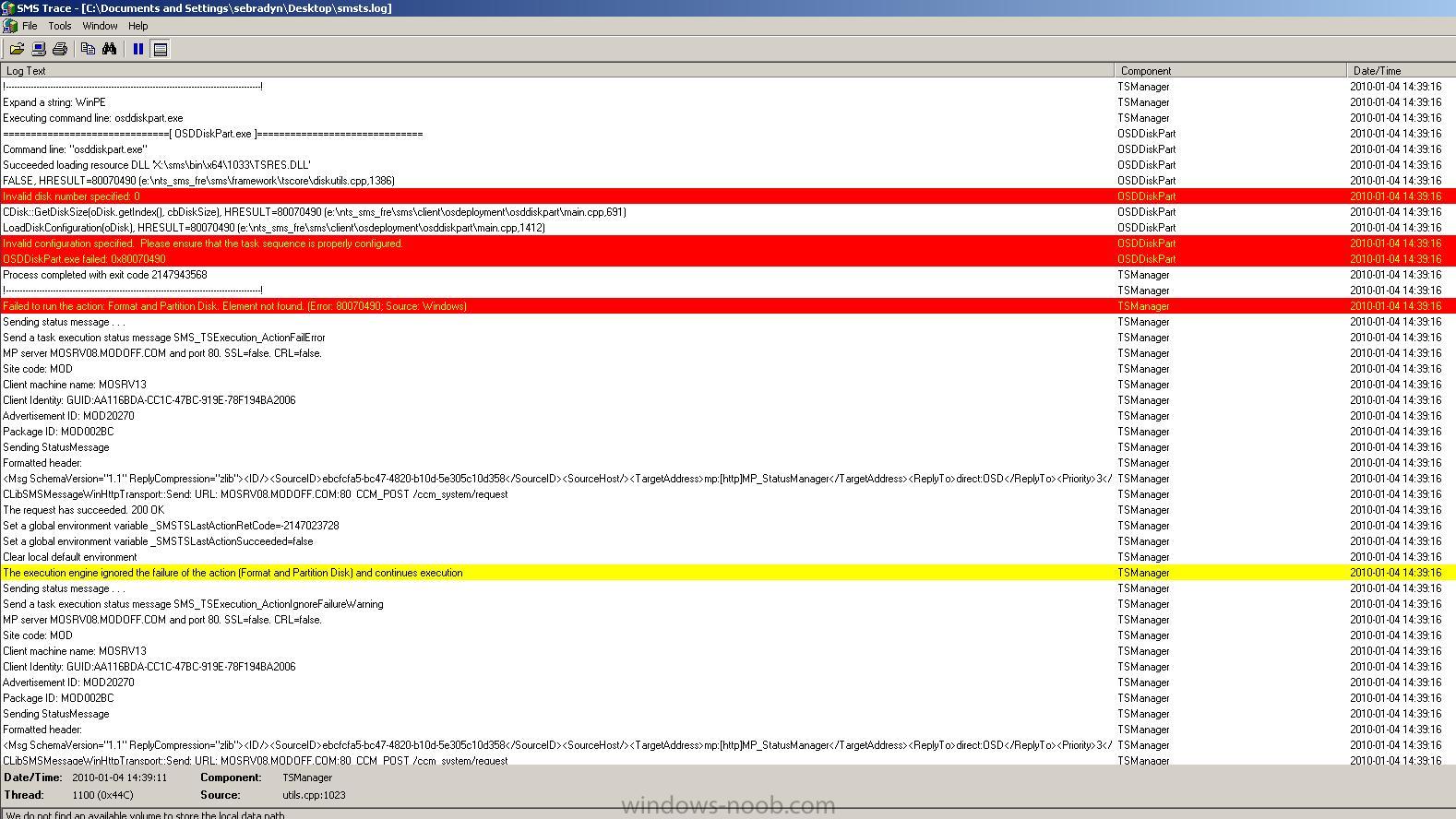
yup trace32 shows up the errors very nicely in red and yellow, after a while you get used to scrolling through it to find the info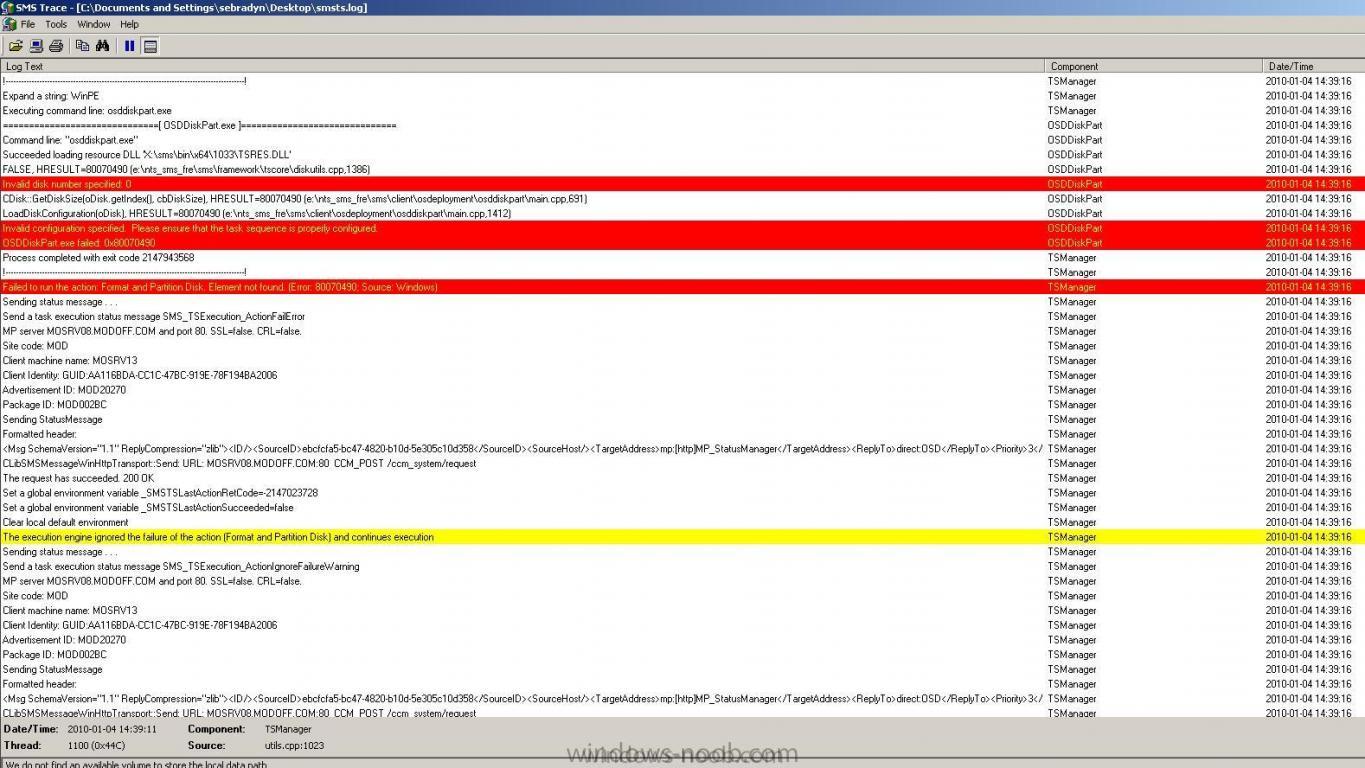
-
There's a lot of talk around the net about a hidden God Mode in Windows 7, but if you dig a bit deeper, you'll see that this is actually not new, this has been a feature since Windows 95. By creating a Random name.{guid of shell namespace provider} this will give you a folder with that namespace. There are many such providers in the system. For example, you could create "Bin.{645FF040-5081-101B-9F08-00AA002F954E}", which is a new recycle bin.
-
odd, can you take a screenshot of the error so that i can see what you are talking about
-
Problem deploying Windows 2003
anyweb replied to ctelfer's question in Troubleshooting, Tools, Hints and Tips
here's your problem and so, is this a RAID system, is RAID configured in any way ? have you added storage drivers ? you'll need to provide more info about the hardware and setup and what you've done so far.... -
try this Capture Windows 7 task sequence instead cheers niall
-
Problem deploying Windows 2003
anyweb replied to ctelfer's question in Troubleshooting, Tools, Hints and Tips
can you post the entire SMSTS.log file here please ? -
yeah my employer requested it to remain closed, so it shall for now. cheers niall
-
wow, that's a first for me, how did you determine it was Mcafee and did you see a mcafee error/log or what ? do you have a screenshot of same ? good work ! cheers niall
-
updates with only a balloon pop-up from the notification tray
anyweb replied to sw2's question in Software Update Point
have you seen this post ? -
hi all, just wanted to say happy new year to you all, it was a long tough year with a lot of interesting things happening in the Windows world which kept us all very busy learning and supporting the new technology, I hope you are all going to have a nice break for the next few days and look forward to seeing you all here next year, to all that awaits us in 2010 cheers niall
-
ok what is failing, the xp updates or the office updates ? i hope you dont have both in the same deployment package, makes it harder to troubleshoot...and manage
-
if you reboot one of those systems and then try again what happens ?
-
I don't normally come across virus's or for that matter spend time with them, but this evening I did and to cut a Long story short this was a mix of malware and/or a very very nasty virus from a computer running XP sp3 fully patched with AVG 8.5. By the time I got to it it was in a sad state, with two icons on the desktop for pornotube and some other website, plus every 2 minutes approx a fake Windows Security Alert would pop up telling you that there was such and such a trojan worm found and to fix the problem download and install antimalware. Obviously I didn't install it, but uninstalling it (the AntiMalware fake antivirus product) made no difference, I couldn't stop the popups. In Task MAnager a process appeared called settdebugx.exe, removing it was my first priority and to do so i had to delete all files in the users temp folder and remove two reg files in HKEY_CURRENT_USER\SOFTWARE\MICROSOFT\WINDOWS\CURRENTVERSION\RUN Ok, that was done, but even after removing that I could not install Microsoft Security Essentials, it kept on erroring out during the install with a failure I later found out that another hidden virus (service) was stopping the installation of this along with stopping me from installing malwarebytes or hijackthis. In addition the task manager showed every two minutes or so two processses starting up, iexplore.exe and ctfmon.exe, if i left them running the pc would freeze soon after. I then downloaded Microsofts RootKit Revealer which listed something called H8Srts, a hidden service (many times....). this was the virus that was causing me the issues ! Removing that involved going to this website to download TDSSKiller, and running that file, which found the hidden service and told me to delete it by typing delete, i rebooted, it was gone, finally and finally i could install antivirus software, what a night, what a mess and I really feel sorry for normal users that are exposed to nasty virus's like this one, I can't imagine how they'd cope with it at all other than a format/reinstall. cheers niall
-
This demonstration shows how to capture a custom Windows system image using the System Preparation Tool (sysprep) to generalize the installed image and ImageX to capture the contents of the generalized system image for re-deployment to other computers - including different hardware types. September 2009 If you've installed Silverlight, you can click the Play button in the video player at left. Or, right-click (Save Target As...) the link below to download. Video Download: WMV Length: 1 minute 50 seconds via > http://technet.microsoft.com/en-us/windows/ee530017.aspx
-
disable the firewall and verify what user accounts being used for the client push, also see > http://www.myitforum.com/forums/m_192852/printable.htm also, please do not pm me or email me to tell me about posts made, i am well aware of posts on the site but unfortunately due to work and other issues do not respond directly to emails unless I have requested you to do so cheers niall
-
Capture OS XP Problem
anyweb replied to MacRasta's question in Troubleshooting, Tools, Hints and Tips
sounds like the nic driver in your boot.wim is not right or not added, can you post your smsts.log file ? -
take a look at the official supported configurations here - http://technet.microsoft.com/en-us/library/bb309428.aspx SQL Server 2008 SP1 is supported for some elements including Audit collection database, Reporting data warehouse, Reporting server, Operations Manager Operations database
-
yup please post it along with explaining what changes you made to fix your content location request problem cheers niall
-
well you can experiment with timing, change it to 3 hours and work your way forwards or backwards noting the DB and SERVER and network activity always test it in your lab first
-
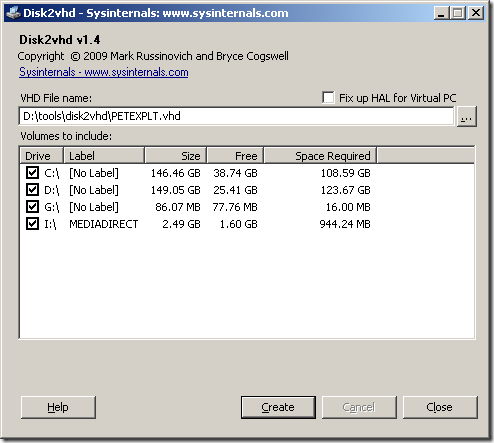
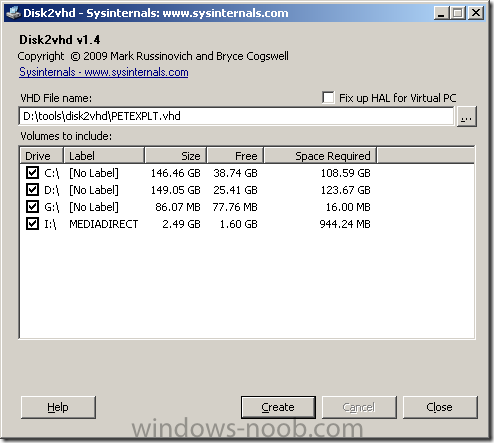
Microsoft has a free application named Disk2vhd, which can create a virtual hard drive (VHD) of your existing operating system. A couple of cool things you should know about Disk2VHD: * It can convert the chosen hard drive into a VHD file, even if it is in use. * It's portable – no installation is required Why would you do this? * Working on another machine - This could come in handy in a couple of situations, such as if you are going to be working on another system, but you still want access to your PC. Just take the VHD with you on a portable drive or flash drive. * For Apps with Compatibility Issues – If you're going to Windows 7, this is a great last step before upgrade. That way if some of your apps don't work due to compatibility issues, you have your old system in virtual form for occasional use. Steps to Create the VHD Here are the steps to create the virtual machine of the existing Windows OS on your physical computer: 1. Download the Zip file and extract to a local drive, portable or flash drive. The just double-click Disktovhd. exe. 2. Disk2VHD will show you the available drives in your computer. 3. Select the drive you want to migrate as a virtual machine. If your OS and apps are installed on C:, select that drive from the interface. 4. Specify the path where you want to save the VHD file. As you can see, the drive is going to be pretty large. 5. Click the Create button. It will take a few minutes to create the vhd file, so you'll have some time to get a cup of coffee whilst it runs. The software will clone a virtual hard disk of the drive selected and save it in specified location. After the vhd file has been created, you can use any virtualization software to mount the virtual hard disk and run the operating system as a virtual machine. Where to get Disk2VHD Download Disk2VHD at http://technet.microsoft.com/en-us/sysinternals/ee656415.aspx via > http://www.systemcentercentral.com/BlogDetails/tabid/143/IndexId/57950/Default.aspx?utm_source=feedburner&utm_medium=feed&utm_campaign=Feed%3A+systemcentercentral%2Fblogs+%28Blogs+at+System+Center+Central%29&utm_content=Twitter
-
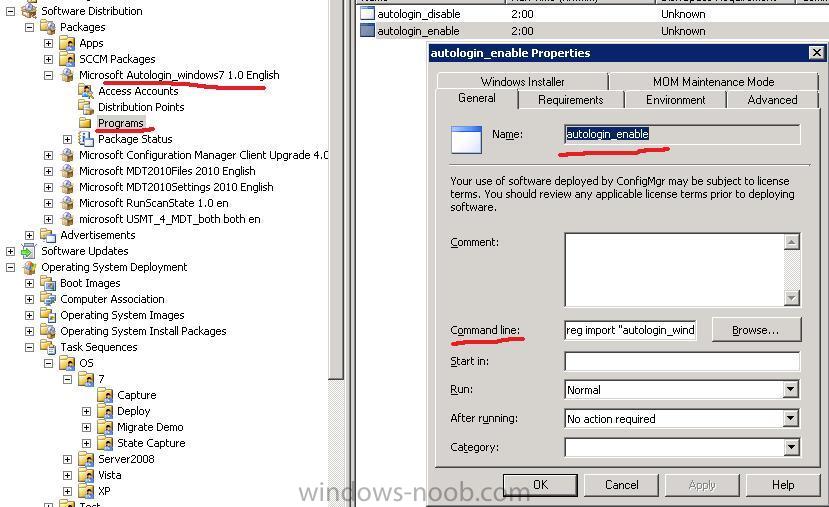
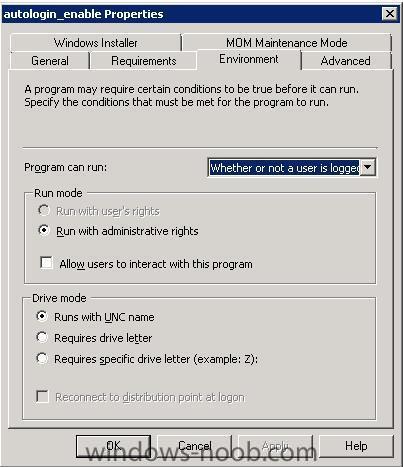
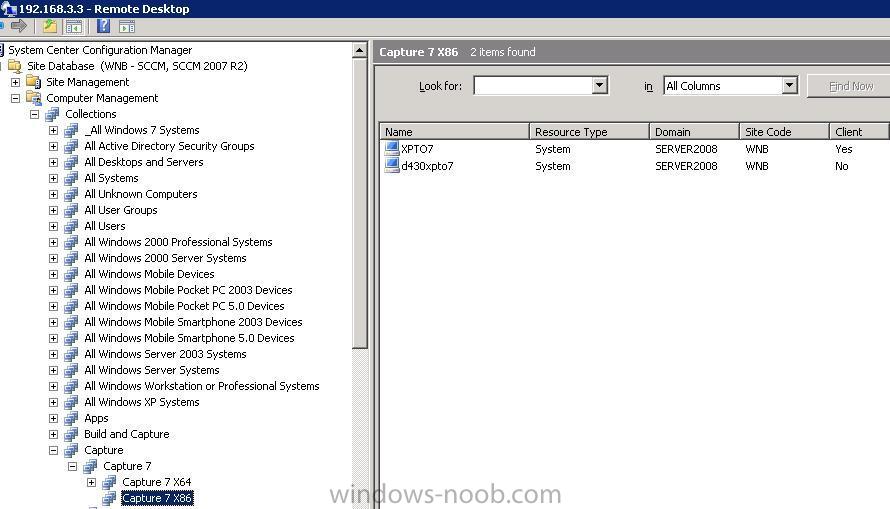
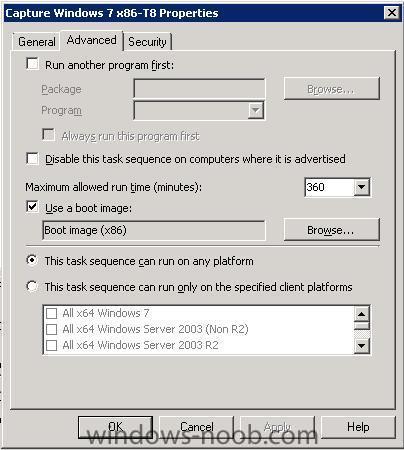
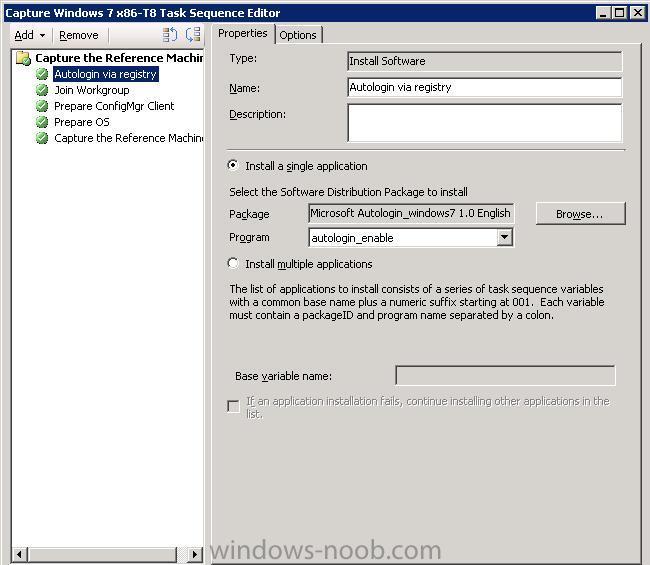
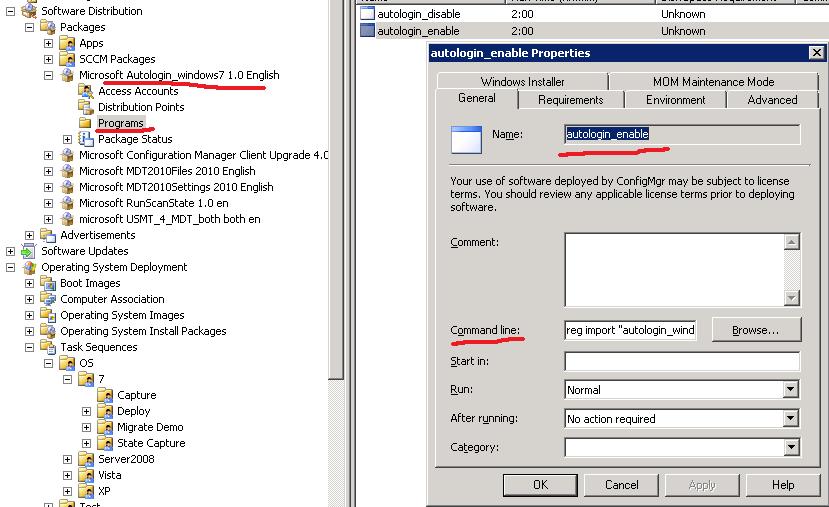
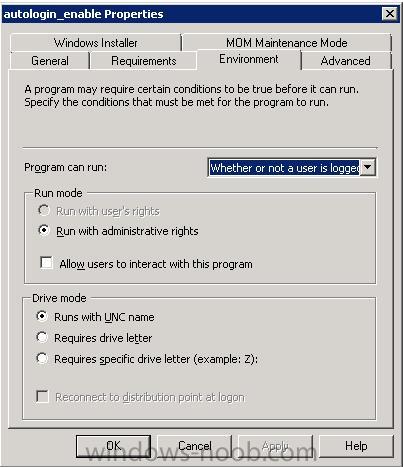
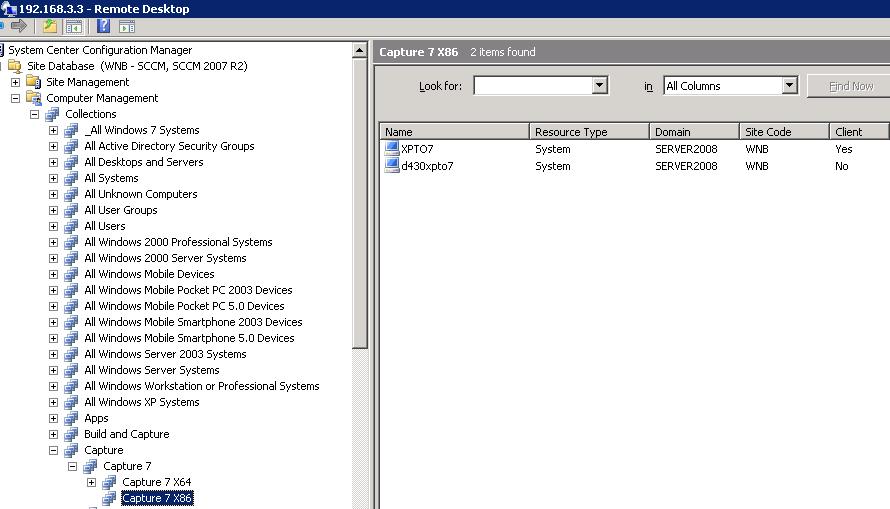
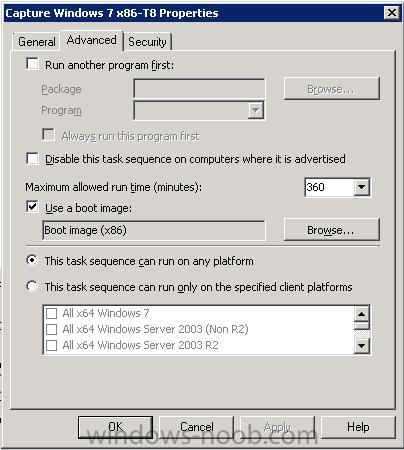
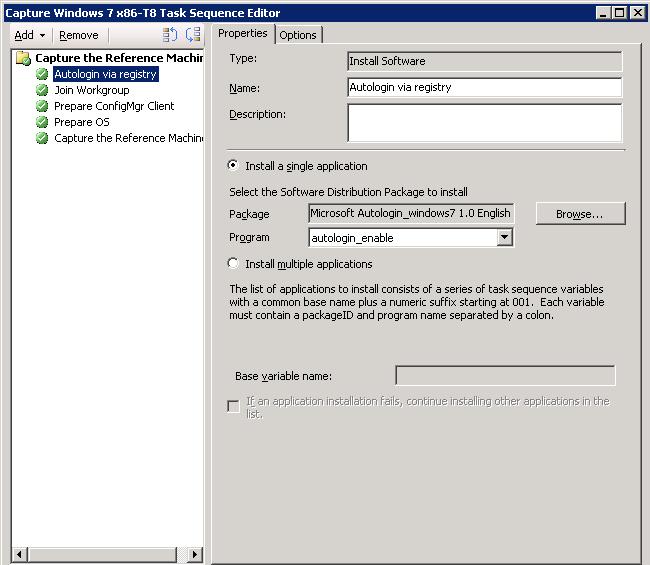
As this is requested a lot, here's how to make it easier for you to Capture Windows 7. Note that this method is not recommended as you should use the Build and Capture method to capture Windows 7 and the computer should not join the domain, that said, if you still want to capture a domain joined computer and you are willing to deploy that captured image (with registry settings from Domain Joining, gpo's etc...) then read on... Import the following Task Sequence into ConfigMgr by right clicking on the Task Sequences node of Operating System Deployment in ConfigMgr, and choose Import. capture Windows 7 X86.xml Once Imported you will have to supply it with two packages namely your X86 boot image and a new package called AutoLogin_windows7 The Autologin_windows7 packgage contains a registry file and a program the Program is as follows: reg import "autologin_windows7.reg" the properties are as follows: and the autologin_windows7.reg registry file contains the following Windows Registry Editor Version 5.00 [HKEY_LOCAL_MACHINE\SOFTWARE\Microsoft\Windows NT\CurrentVersion\Winlogon] "AutoAdminLogon"="1" "DefaultUserName"="Administrator" "DefaultPassword"="password" replace password above with the local admin password... once done, make sure to edit your task sequence so that it's using your X86 boot image by right clicking on the Task Sequence, select properties and select the correct boot image, then make sure that the Task Sequence is using your new autologin package by right clicking on the Task Sequence and choose Edit, finally advertise it to a capture windows 7 collection and add a computer to that collection using direct membership After you've added the computer to the collection, start it up, login to Windows, open control panel, open the RAP (run advertised programs) and kick off the Capture windows 7 task sequence. Side note: you'll need to create a step in your deploy task sequence to remove the registry autologin values otherwise the deployed image will attempt auto login on first boot.. Further Reading: 1. Auto Login as part of OSD Task Sequence 2. Login Single Domain User for Caching After Imaging via Task Sequence