



anyweb
-
Posts
9290 -
Joined
-
Last visited
-
Days Won
371
Everything posted by anyweb
-

SCCM 2012 R2 Console unable to Connect its SQL 2012 Database
anyweb replied to angurpatel's question in How do I ?
what does the event viewer tell you ? have you tried a reboot -
this script is hard coded to d: see here Wshell.Run "%comspec% /C manage-bde.exe -protectors -get d: > x:\BLInfo.txt",1,true Set InfoFile=fso.OpenTextFile("x:\BLInfo.txt") you can change that to point to a variable instead (I believe i'm doing that in the CM12 UEFI BitLocker HTA which contains an updated version of this script) so if your bitlocker disk is not on d: it will not unlock it
-
Trigger consistency check
anyweb replied to cmilli's question in System Center Data Protection Manager
hi, Robert replied to your question on the windows-noob facebook group here. https://www.facebook.com/groups/windowsnoob/430097697191247/ -
your command isn't correct and is missing at least one backslash C:Windows\System32\WUSA.exe /uninstall /kb:2531912 /quiet /promptrestart try this instead cmd.exe /c "C:\Windows\System32\WUSA.exe /uninstall /kb:2531912 /quiet"
-
Surface Pro 3 wim Imaging
anyweb replied to ykgreene's question in Deploying Windows 10, Windows 8.1, Windows 7 and more...
have you seen this yet ? http://www.niallbrady.com/2015/02/11/a-list-of-surface-pro-3-resources-for-both-mdt-2013-and-system-center-2012-r2-configuration-manager/ -
without going into details i'll reply in a very short version indeed:- a CAS is only required if you want to support over 100,000 clients or need a hierarchy of primary sites (that means, more than one primary) a PS is a Primary and is required to support the functions necessary for normal operations a Secondary site is generally used to 'offload' the load on a wan (for example) when you have say 3000 or so clients at a remote location and don't want policy requests going over the wan to the primary, instead, they (the policy requests) will go to the secondary site. for more information about all those different options refer to the Technet links i posted in part 1 of this guide pasted below for your pleasure: Technet Recommended Reading:- Release Notes for System Center 2012 Configuration Manager- http://technet.micro...y/jj870706.aspx Fundamentals of Configuration Manager - http://technet.micro...y/gg682106.aspx Supported Configurations for Configuration Manager - http://technet.micro...y/gg682077.aspx Planning for Configuration Manager Sites and Hierarchy - http://technet.micro...y/gg682075.aspx Example Scenarios for planning a simplified Hierarchy - http://technet.micro...y/gg712989.aspx Site and Role Scalability - http://technet.micro...iteAndRoleScale Getting Started with Configuration Manager 2012 - http://technet.micro...y/gg682144.aspx What’s New in Configuration Manager - http://technet.micro...y/gg699359.aspx Planning for Site Systems in Configuration Manager - http://technet.micro...y/gg712282.aspx Install Sites and Create a Hierarchy for Configuration Manager - http://technet.micro...y/gg712320.aspx Technical Reference for Site Communications in Configuration Manager - http://technet.micro...y/gg712990.aspx Migrating from Configuration Manager 2007 to Configuration Manager 2012 - http://technet.micro...y/gg682006.aspx Frequently Asked Questions for Configuration Manager - http://technet.micro...y/gg682088.aspx
-
here's your failure fix that and then it should continue, why however are you doing this ?
-
what software are you trying to deploy using GPO and what errors were encountered on the target computers assuming you looked at the event viewer.
-
have you looked at parallels ?
-
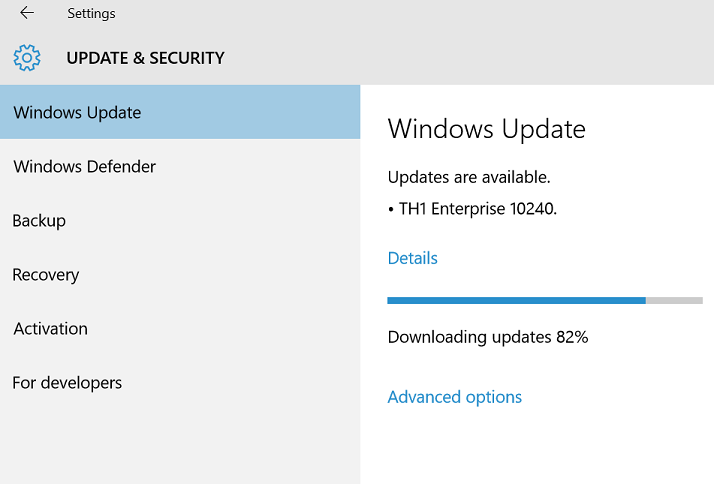
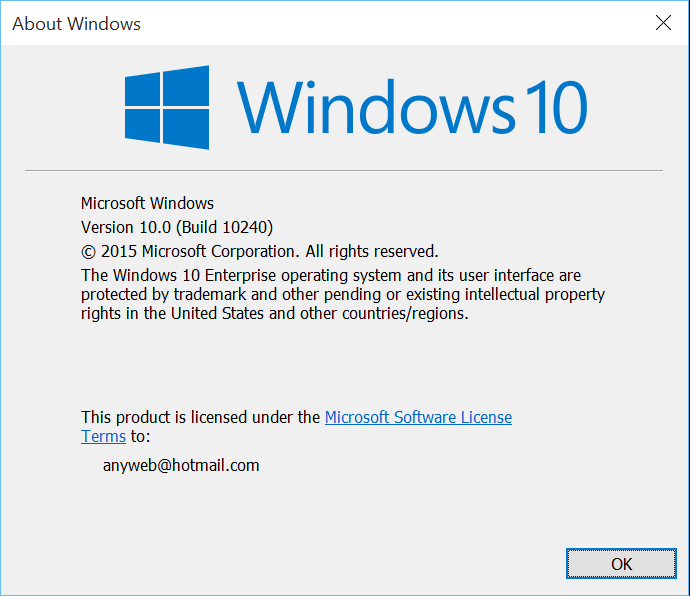
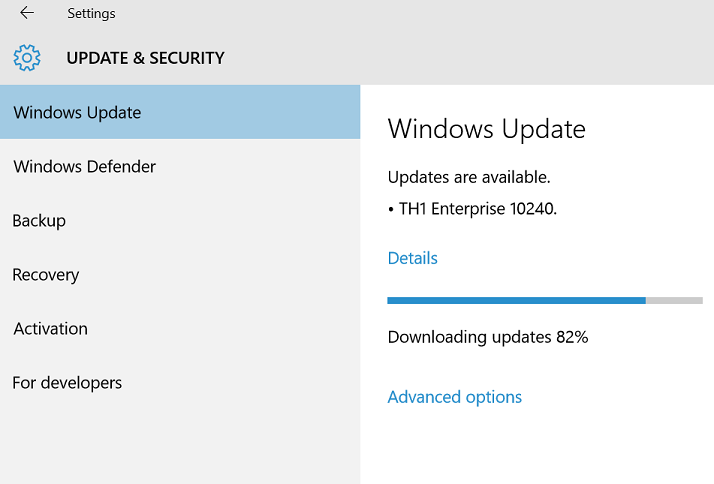
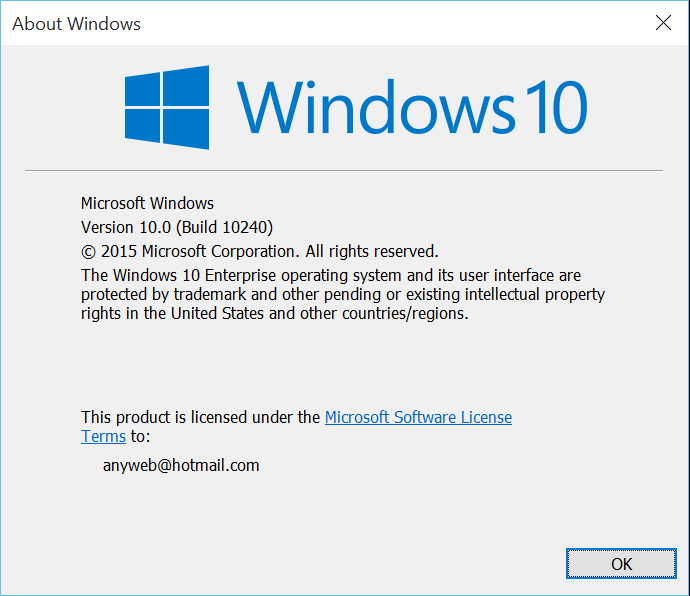
Yet another build of Windows 10, this time 10240 is available, and it's a TH build meaning threshold or 'very near to RTM'. and after the update is complete you get a new OOBE requiring you to accept the license terms, review the new apps like Microsoft EDGE and then accept the settings changes, once you login, the Watermark is gone, you can review the Windows version using winver in a cmd prompt. This build feels complete, even The Verge claims it might be the RTM release. You can read about the release here. http://blogs.windows.com/bloggingwindows/2015/07/15/build-10240-now-available-for-windows-insiders-in-fast-and-slow-rings/
-
OSD Windows 7x64 and UEFI partitioning
anyweb replied to jrgonzalez_nyc's topic in Configuration Manager 2012
my advice with UEFI is use UEFI designed os's for UEFI deployments and that would be Windows 8 and onwards, I've done Windows 7 deployments in UEFI mode and they are patchy at best, for example on lenovo's they work as long as CSM mode is enabled but Secure boot must be disabled as it's not Windows 7 aware, rather than struggle with Windows 7 and UEFI, why not just go for Windows 10 in UEFI mode ? -
is the MDT server configured using this script or otherwise ?
-
OSD Windows 7x64 and UEFI partitioning
anyweb replied to jrgonzalez_nyc's topic in Configuration Manager 2012
yup, and if you look at your log it looks ok <![LOG[successfully completed the action (Partition Disk 0 - UEFI) with the exit win32 code 0]LOG]!><time="12:55:10.084+420" date="07-13-2015" component="TSManager" context="" type="1" thread="560" file="instruction.cxx:830"> so... what happens after this ? are you sure it's failing at this point, can you press f8 when it's failing and verify that you are capturing the log from x:\windows\temp\smstslog\smsts.log -
OSD Windows 7x64 and UEFI partitioning
anyweb replied to jrgonzalez_nyc's topic in Configuration Manager 2012
well the disks are in legacy non-gpt mode so i think that's causing issues, are you starting the task sequence in windows or via PXE ? -
OSD Windows 7x64 and UEFI partitioning
anyweb replied to jrgonzalez_nyc's topic in Configuration Manager 2012
are you starting this in Windows ? and is the system in UEFI mode or LEGACY mode prior to running the task sequence ? -
your hta is not showing as it's running as system and therefore hidden from the user (you) try running it with serviceUI.exe from the mdt 2013 toolkit and it will work just fine (in Windows) to find out how to use serviceUI.exe see this post
-
here is your error make sure that xml file is present in the package referenced (ZTS00001)
-
what does the scanstate.log say ? this is the log generated by the capture * state step
-
to troubleshoot press f8 at that point and review the smsts.log using cmtrace have you tried that ? you can attach it here if you wish in winpe its at x:\windows\temp\smstslog\smsts.log
-
Introducing the windows-noob.com FrontEnd HTA ver 1.0
anyweb replied to anyweb's question in Frontends, HTA's and Web Services
yup i'll do that -
Microsoft have released yet another new Windows 10 build prior to the release of the OS on July 29th. Here's the press release below: "We have a new build for PCs we’re releasing today to Windows Insiders in the Fast ring – Build 10166. Just like the 3 builds we released last week, this build is all about bug fixing and fit-and-finish. Be sure to keep using the Windows Feedback app to send us feedback on any problems you’re hitting to help us make sure Windows 10 is awesome when we release it on July 29th! We also have something for you to try out if you live in the Seattle area. With Windows 10, we are giving people the ability to purchase paid Wi-Fi through the Windows Store via the Microsoft Wi-Fi app. You will know when you can purchase Wi-Fi when you see “Buy Wi-Fi from Windows Store” in your list of networks when clicking on the network icon on the lower right in the Taskbar. The Microsoft Wi-Fi app provides the choice to pay with a Credit or Debit Card, a Microsoft Gift Card, or PayPal and it helps keep your information secure since it uses the Windows Store payment system. Completing the purchase is simple as there is no need to enter additional personal or payment information if you’ve already registered in Windows Store. Right now, we’re testing this experience out in Seattle but it’ll soon open up to the rest of the U.S. We also have a corresponding Windows 10 SDK preview release with this build. The Building Apps for Windows blog will go into details on the change log. As always, you can download the latest Windows SDK and mobile emulator from the Windows 10 Developer Tools page. For those of you on older builds – now is definitely the time to upgrade to the most current build. Grab 10166 from Windows Update today or build 10162 ISOs from the Windows Insider Program website. Thank you to all of our Windows Insiders who have given us terrific feedback and helped us shape Windows 10. We’re getting close to release now and the whole team here is working hard and incredibly excited!" via > http://blogs.windows.com/bloggingwindows/2015/07/09/announcing-windows-10-insider-preview-build-10166/
-
Introducing the windows-noob.com FrontEnd HTA ver 1.0
anyweb replied to anyweb's question in Frontends, HTA's and Web Services
i havent tested it with Technical Preview 2 but if i do so i'll let you know, you should really look at the latest version of this frontend and it's here. CM12 in a Lab - The CM12 UEFI BitLocker FrontEnd HTA - Part 2. Installation CM12 in a Lab - The CM12 UEFI BitLocker Frontend HTA - Part 1. The features. -
Introducing the windows-noob.com FrontEnd HTA ver 1.0
anyweb replied to anyweb's question in Frontends, HTA's and Web Services
which versions do you mean, please be specific -
Deploying apps via UDI - Issues!
anyweb replied to MorsePacific's topic in Configuration Manager 2012
logs logs logs, i know it's frustrating to have these issues but without logs what can we do, please attach zipped copies of your SMSTS*.log and app*.log -
How to make the .wim of Windows 7 for Pre installed software.
anyweb replied to niyaz Ahmed's question in Windows Deployment Services
use mdt 2013 to create your master image, (reference image) Johan and Mikael have many example blog posts about doing this, heres a sample. http://deploymentresearch.com/Research/Post/357/Building-reference-images-like-a-boss