



anyweb
-
Posts
9290 -
Joined
-
Last visited
-
Days Won
371
Everything posted by anyweb
-
how can we suggest if it's a right design without knowing more about what you intend to do with this SCCM setup, how many clients will it manage, what type of clients, what locations, what operating systems...
-
 hi Dave_23, thanks ! it works fine, you must be a logged on user of windows-noob.com to download the scripts, please try again.
 -
what version of SCCM, what version of MDT ? if you look at the boot image properties, is the option still checked ? have you tried redistributing the boot image to the dp's after the change also, are you 100% sure that this boot image is the one you were working on, you should see the package id when booting...
-
have you looked at your client agent settings ? i would imagine that any setting configured in there is what makes the registry keys get set, perhaps you have some settings being applied which are not correct for these clients
-
Drivers
anyweb replied to sysadmin101's topic in System Center Configuration Manager (Current Branch)
it should only apply drivers from the package that windows deems necessary based on hardware found, you can verify this in the dism logs generated during windows setup -
great to hear it !
-
check this out https://social.technet.microsoft.com/wiki/contents/articles/3081.ad-cs-error-the-directory-name-is-invalid-0x8007010b-win32http-267.aspx
-
also, can you guys post screenshots of your issue(s) so we can try and figure out what the issue really is
-
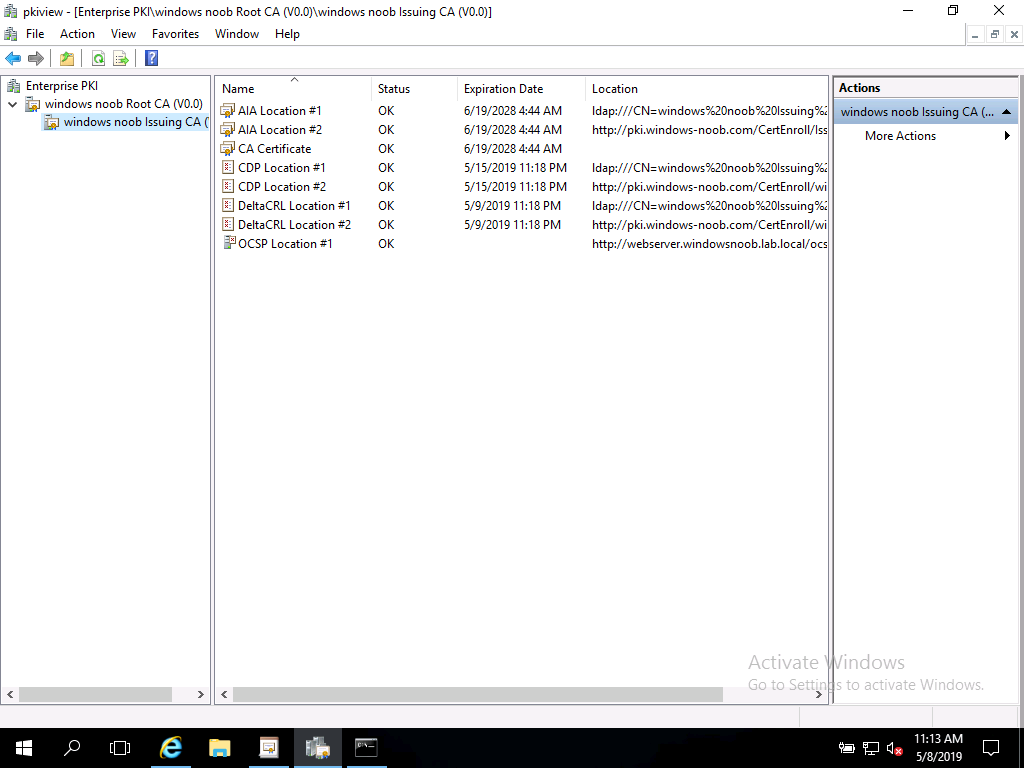
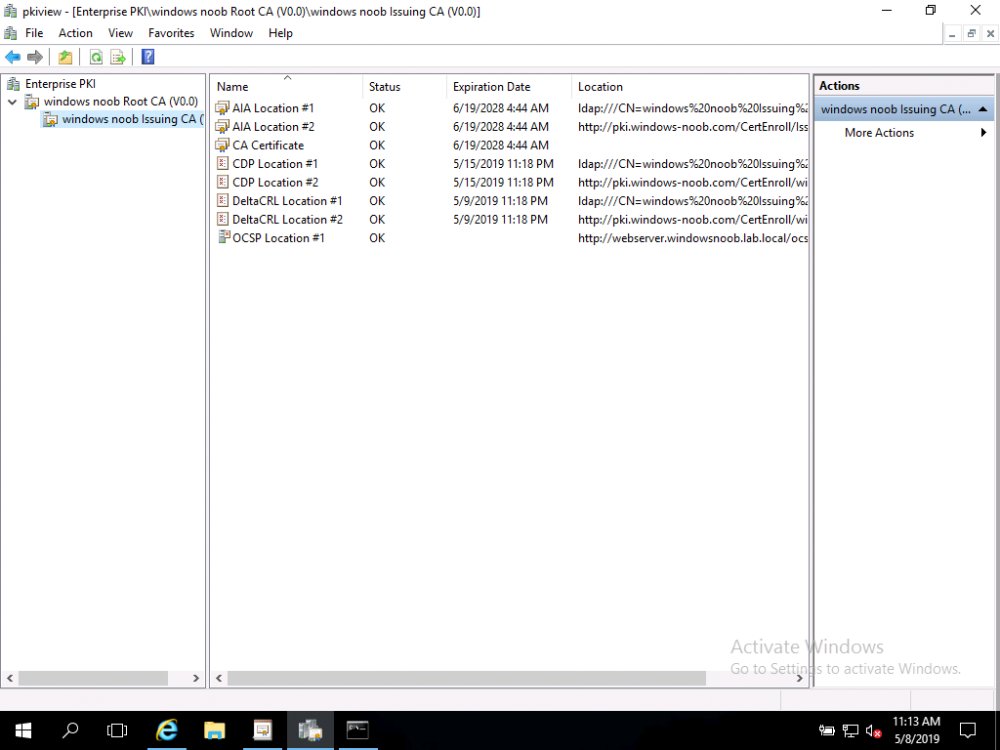
odd, i've just checked my current PKI lab and although my certs were expired (it's a lab and was shut down since march), using certutil -crl on the IssuingCA republished my certs and all is ok now. I've tested the PKI lab guides 3 separate times (I built 3 completely unique labs based on my own guides, eg: Lab #9, Lab #10, Lab #11) and all suceeded 100% as you can see below in my #11 lab... I would suggest you guys try again and verify each and every step as you go, also, take checkpoints (snapshots) between each part so that you can always go back if you make a mistake, lastly, the pki.windows-noob.com webserver URL, will of course be your 'own' url, and it must be reachable by the issuing CA and others or pkiview.msc will list a bunch of errors/failures. Troubleshooting Tip: in PKIview.msc, highlight an entry and click on the Refresh button in the ribbon, it should re-verify the highlighted item.
-
they do but you still need to know if it's win7 or win10.... if you get time over teamviewer later i'd like to spend ten minutes with this to have a look
-
can you please attach your cmupdate.log and configmgrprereq.log
-
hi, are you doing a clean install of SCCM 1902 or are you upgrading to 1902 ?
-
How can I customize the start menu in Windows 10 using Intune
anyweb replied to anyweb's topic in Microsoft Intune
great to hear it, thanks for the feedback- 20 replies
-
- 1
-

-
- windows 10 fall creators update
- intune
- (and 3 more)
-
if you get a chance to try my edit i'd be grateful, as regards the OOBE, you shouldn't have to answer questions at first login, those can be customized using an unattend.xml file
-
hmm i wish you'd use the edit i did above as that would confirm if it works on French Windows, what happens when you try with the code i added above ?. can i see what it outputs ?
-
the vbs version had some issues and it was vbs, so it's definitely better to use the PowerShell version, i've seen your issue before, I think the French spelling for Enterprise is Entreprise, correct me if i'm wrong, the line you need to edit is this one, number 360 If ($OperatingSystem -eq "Microsoft Windows 10 Enterprise") if you change it to this, it should work in your environment, please test and give me feedback if (($OperatingSystem -eq "Microsoft Windows 10 Enterprise") -or ($OperatingSystem -eq "Microsoft Windows 10 Entreprise")) cheers niall
-
i wouldn't advise you to start learning with old technology that is soon to be unsupported, instead use the Current Branch version of SCCM with SQL Server 2017. Here's a very detailed step-by-step guide to help you install it.
-
can you paste a screenshot of your failure please, also are you running it on the Standalone Offline Root CA
-
make sure you download the latest version of my script(s), there was a bug with a previous version where it wasn't getting reset. The PowerShell wrapper should reset the delete the values entirely prior to launching the task sequence. Below is the section of the wrapper.ps1 that does this fyi. # clean out registry settings for the next upgrade attempt. LogWrite "Starting: remove the UpgradeComputer reg keys so that the next upgrade cycle can start fresh." $regpath = "HKCU:\Software\$CompanyName\" $regkey = "UpgradeComputer" DeleteRegKey $regpath $regkey $regpath = "HKCU:\Software\$CompanyName\" $regkey = "NumberOfUpgradeDefers" DeleteRegKey $regpath $regkey $regpath = "HKCU:\Software\$CompanyName\" $regkey = "Timer" DeleteRegKey $regpath $regkey LogWrite "Starting: Exiting wrapper with exit code 0 and about to start the task sequence now."
-
Altaro has published a new e-book which focuses on Windows Admin Center - a versatile, free management tool from Microsoft. It’s written by Eric Siron and full of informative information on a superb free tool from Microsoft. Get your copy here.
-
i wonder could this be related https://support.microsoft.com/en-us/help/4500232/management-points-fail-to-reinstall-in-configuration-manager
-
SCCM 1806 To Manage Third Party Updates
anyweb replied to Sourabh's topic in Configuration Manager 2012
id recommend you look at Patch My PC, here's a guide I wrote -
good luck with the book, but next time, do ask first...
-
yes it's possible but you'll probably have issues with data transfer from the laptop as laptops are not exactly fast, unless of course it's using NVME discs...
-
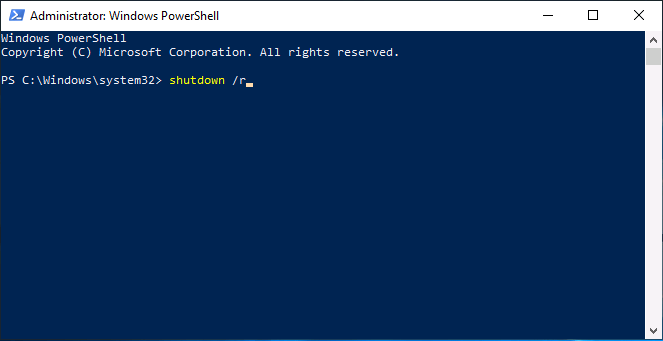
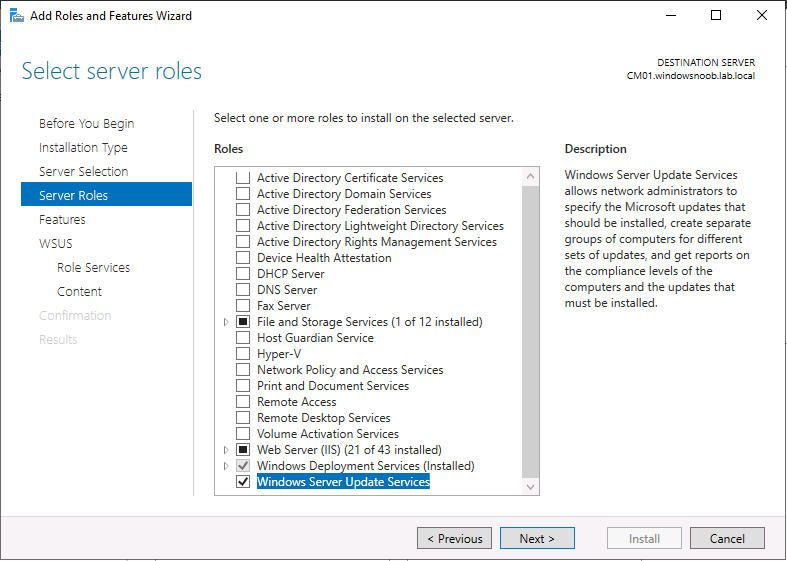
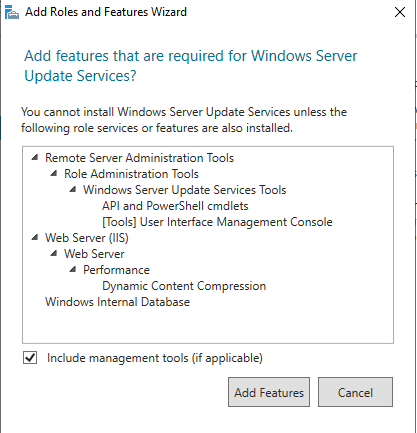
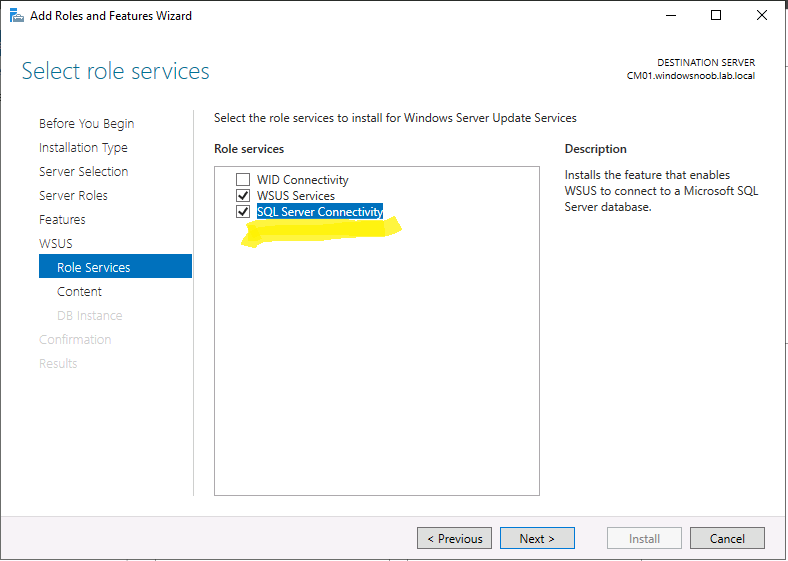
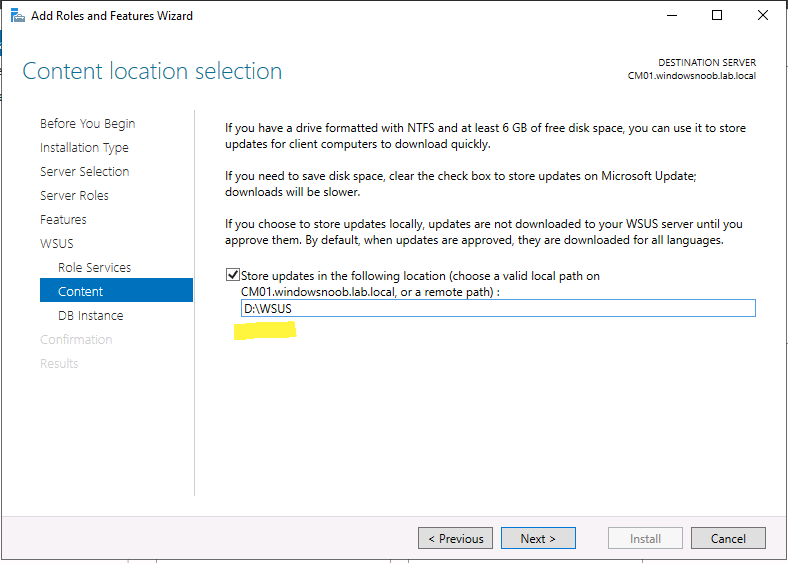
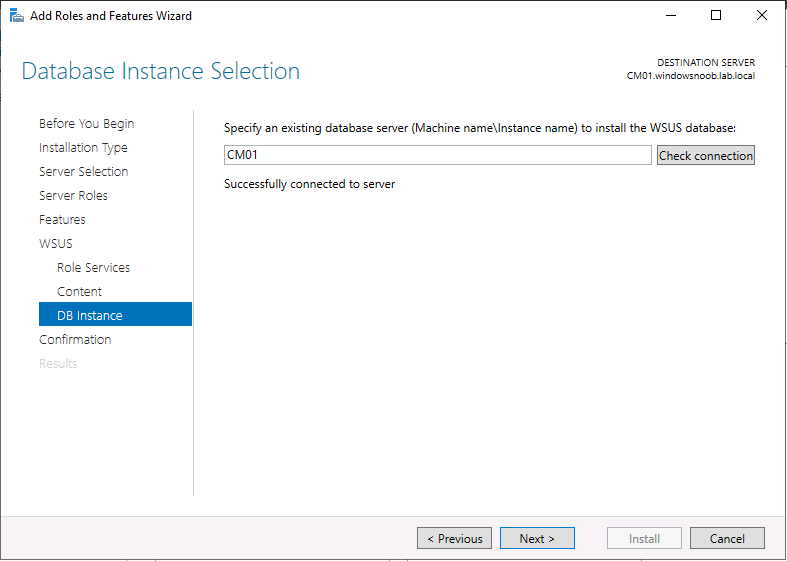
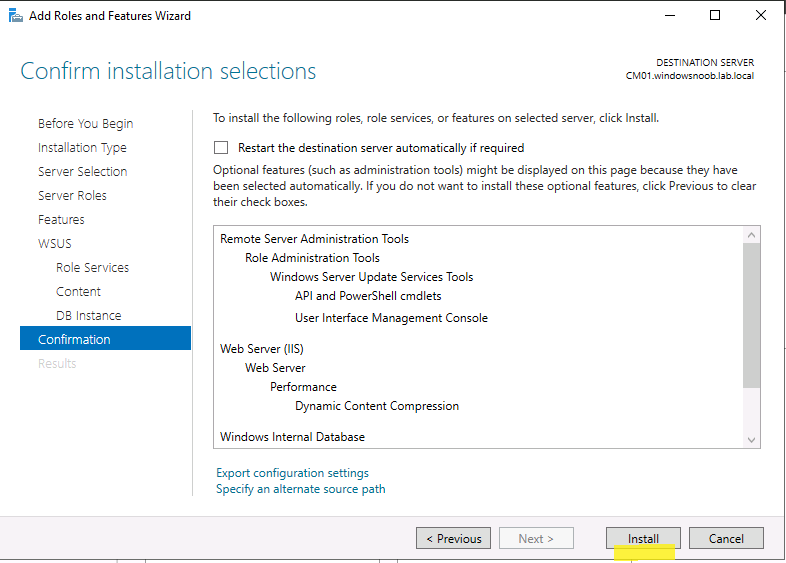
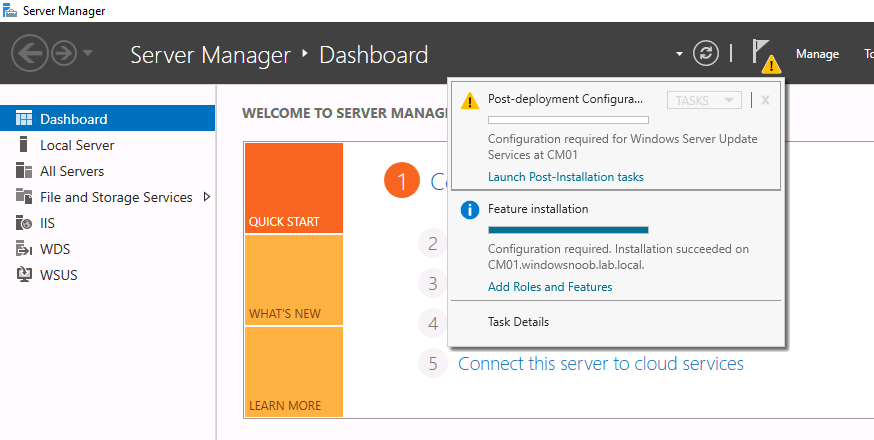
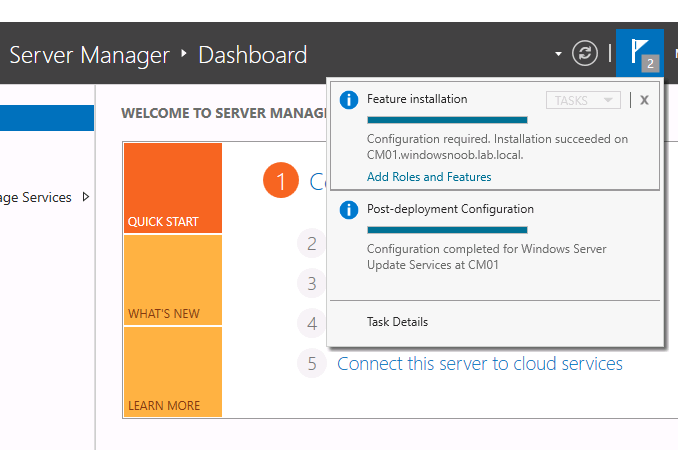
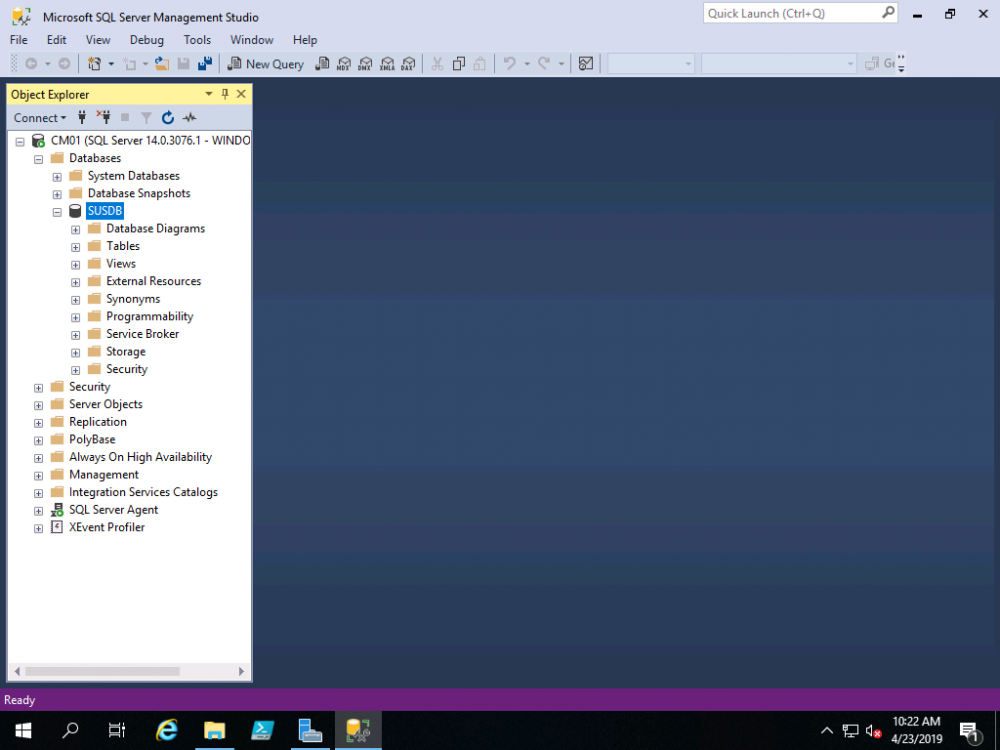
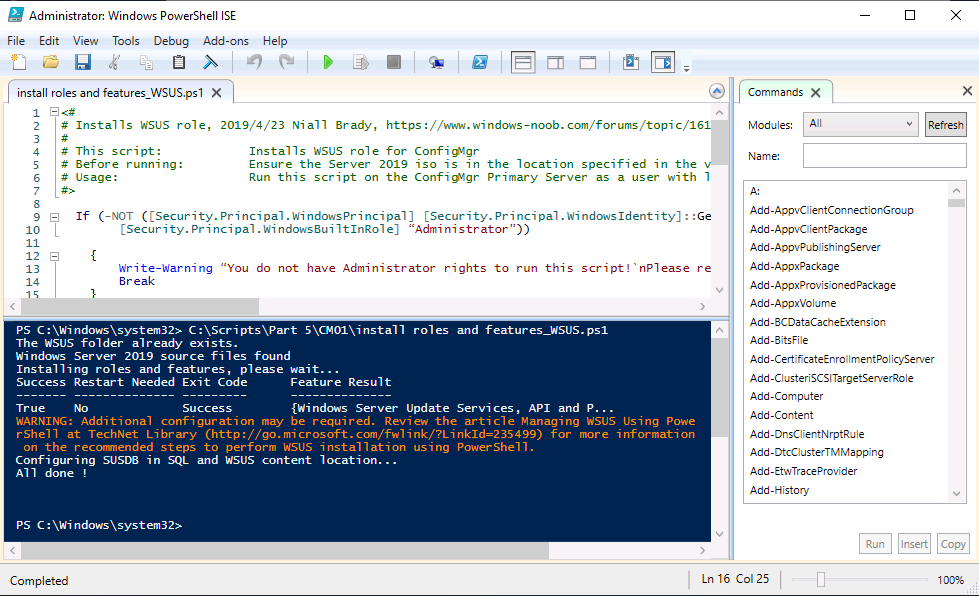
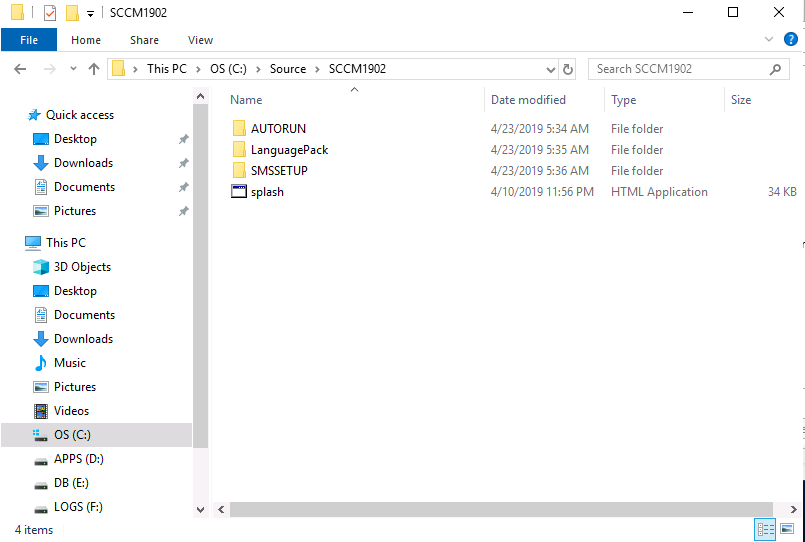
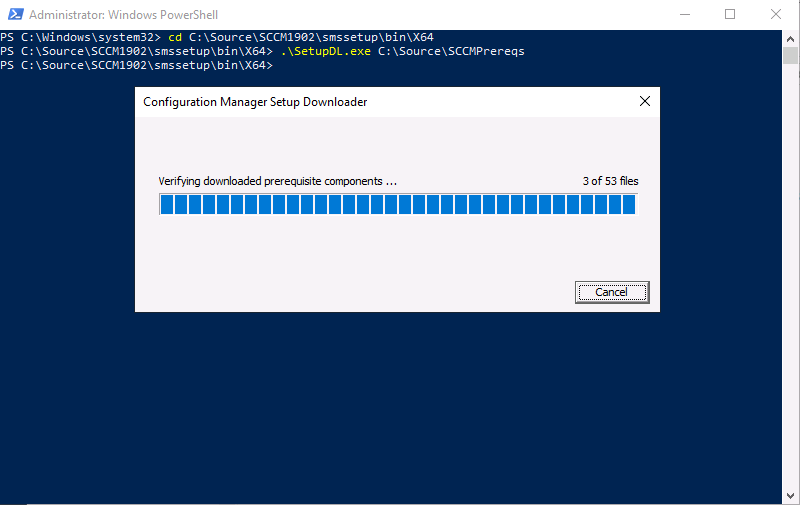
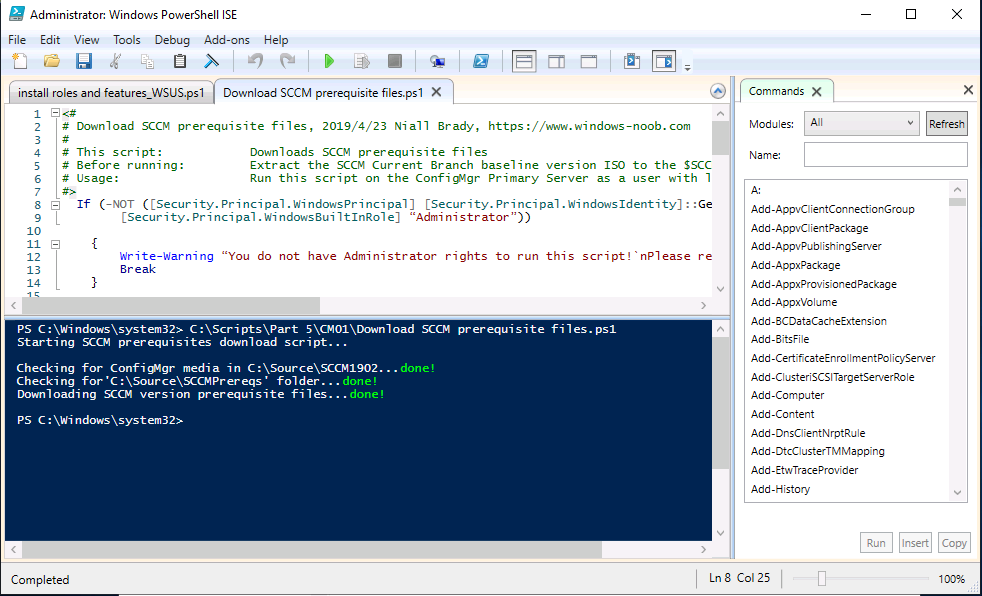
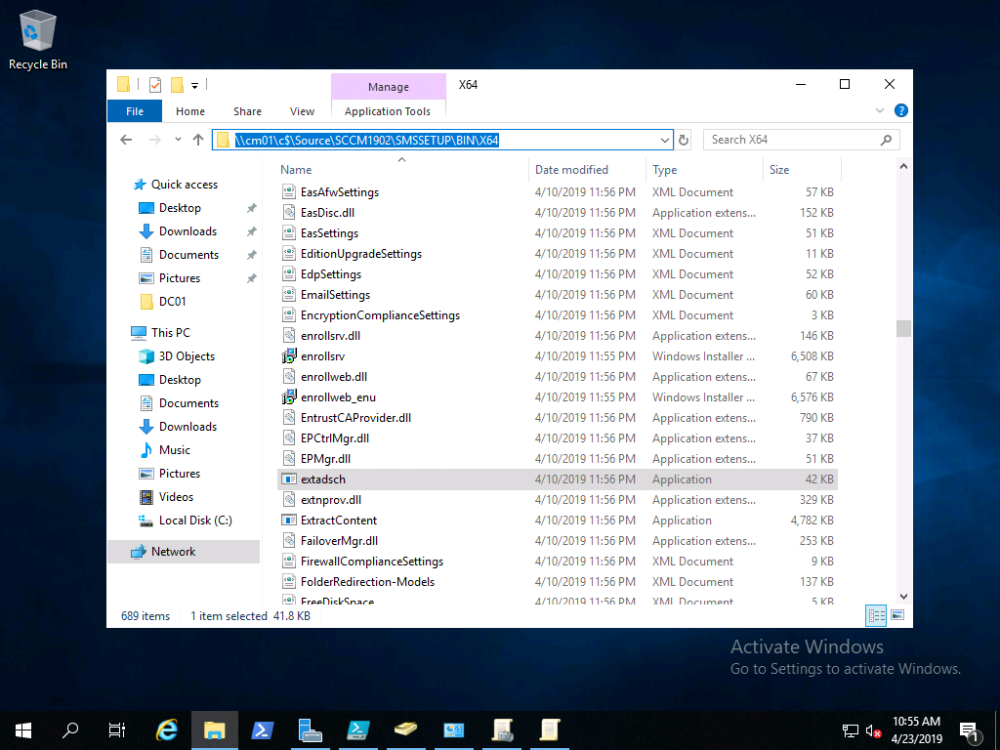
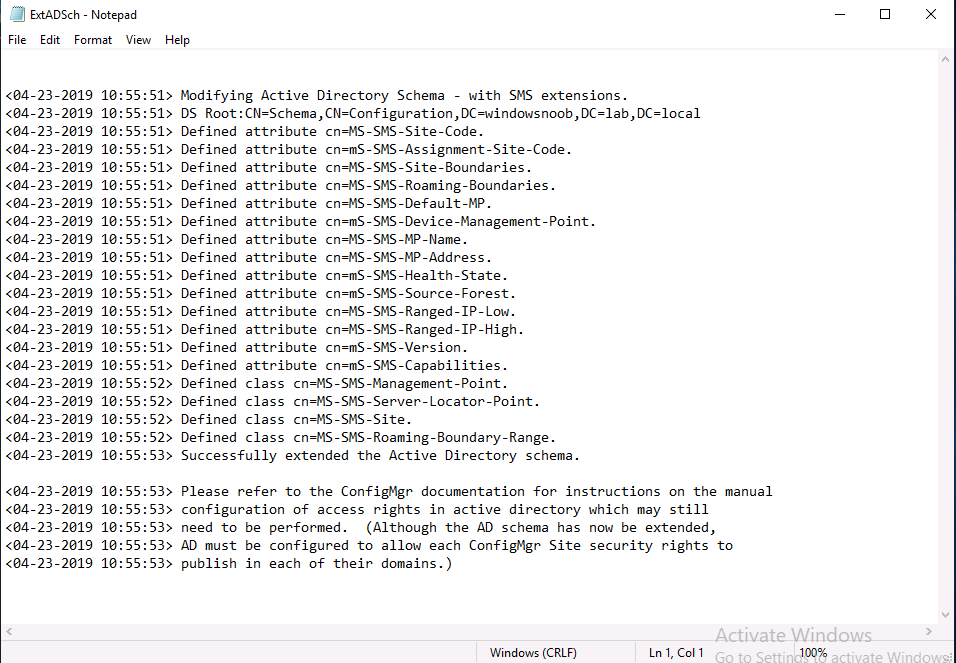
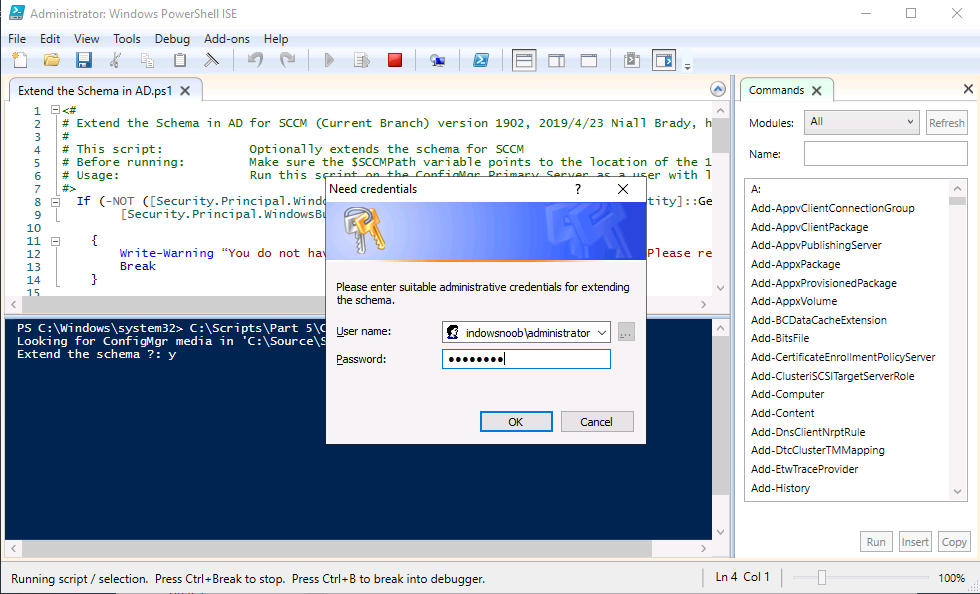
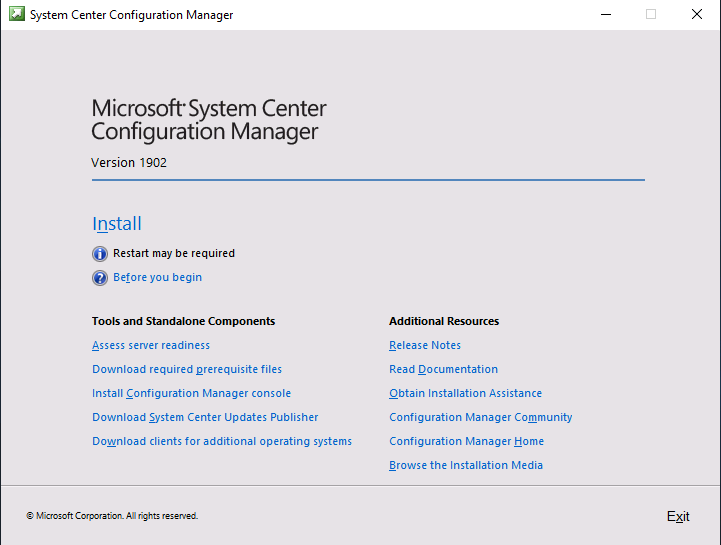
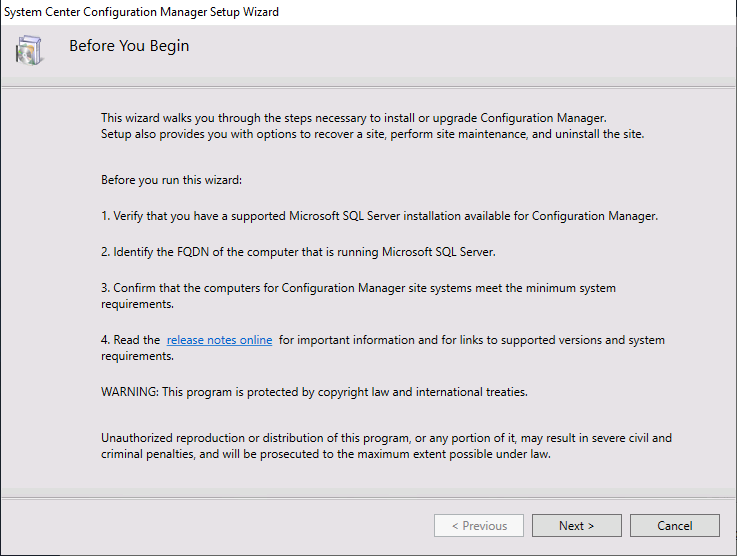
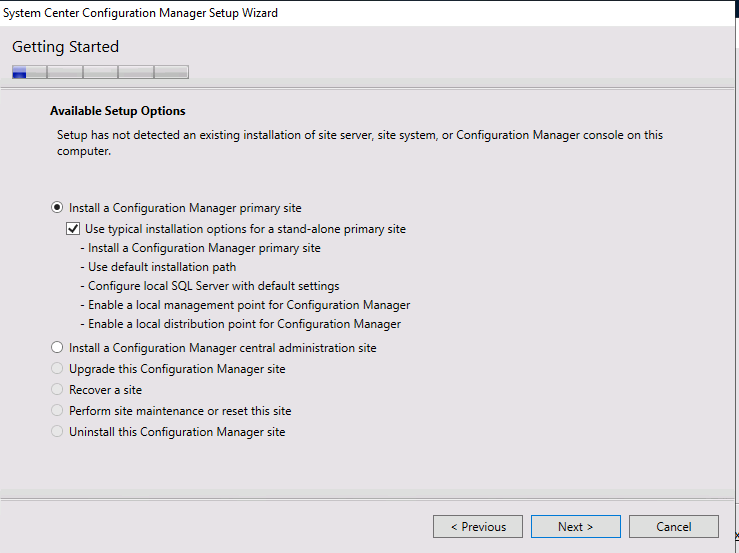
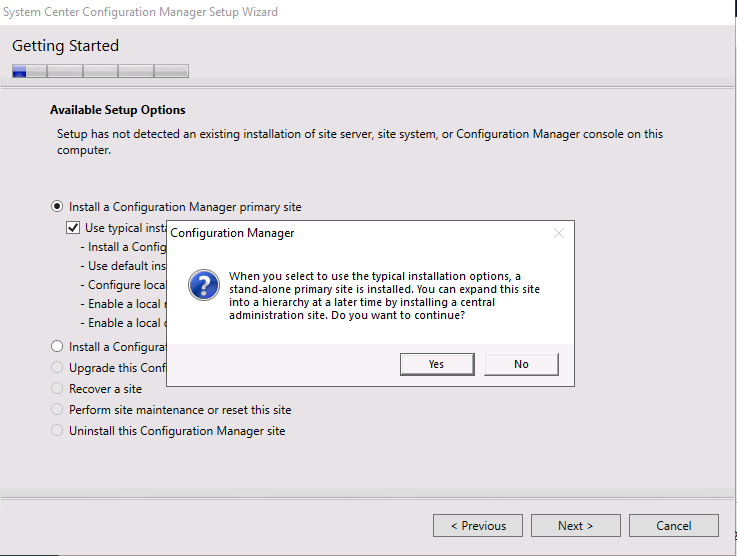
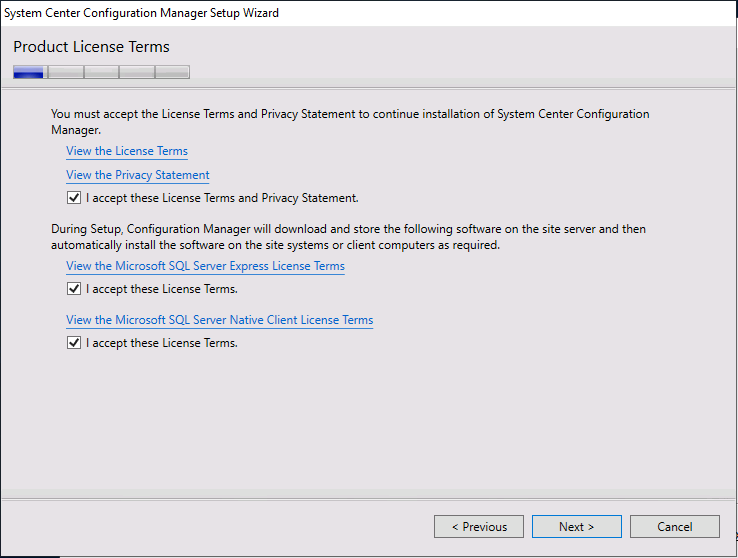
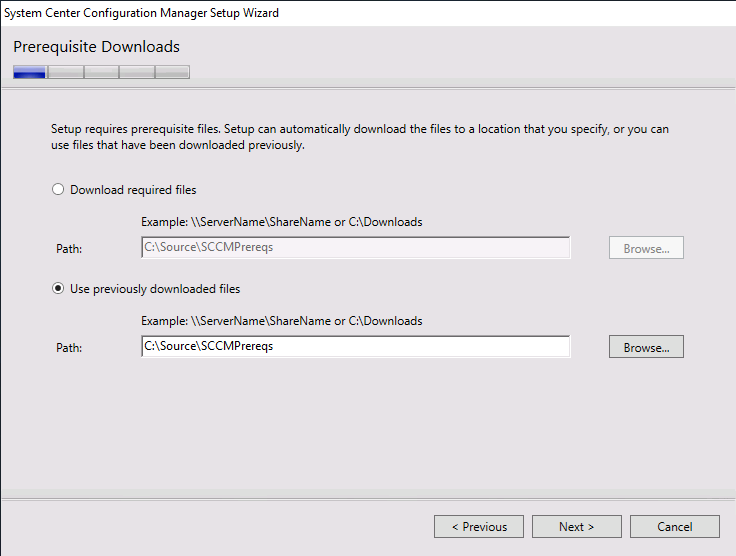
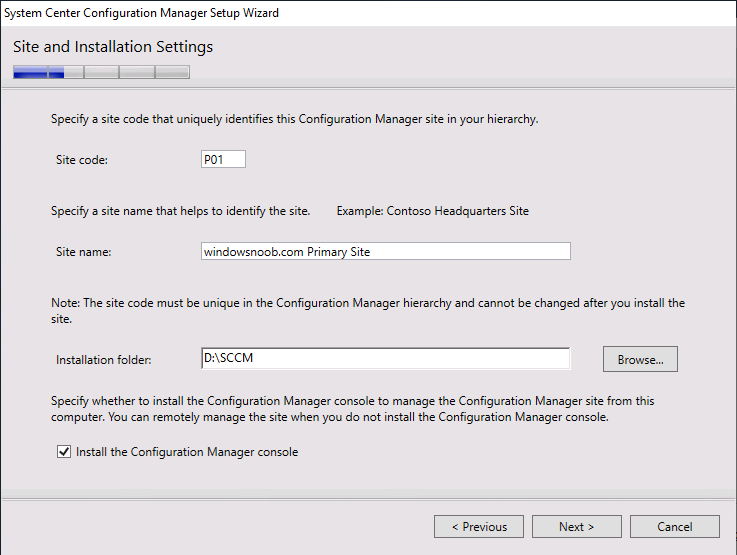
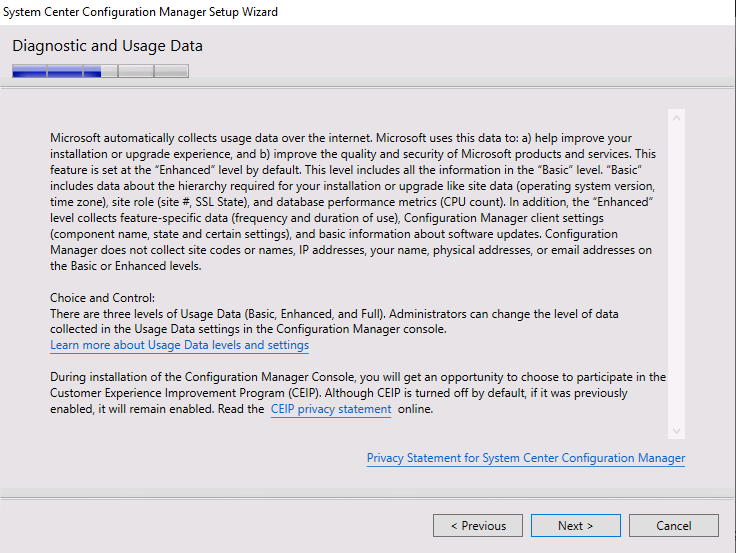
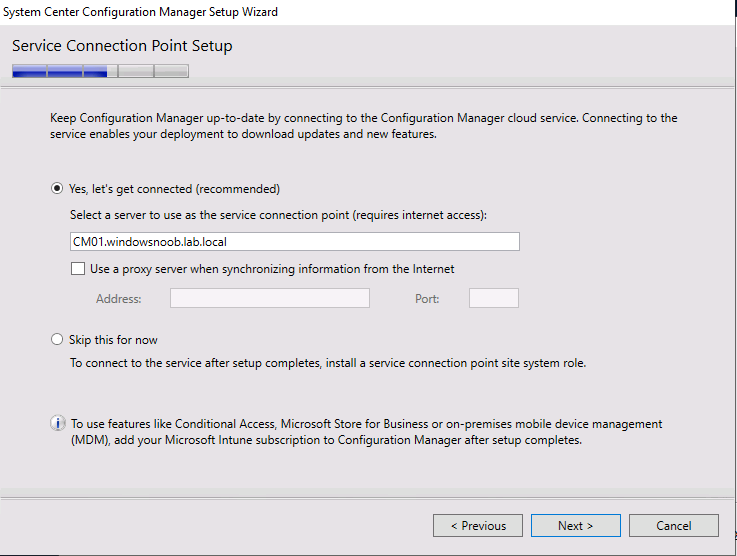
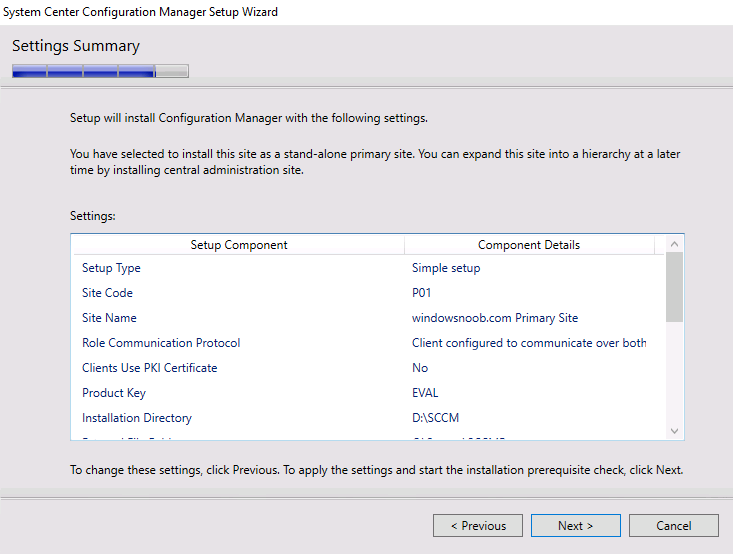
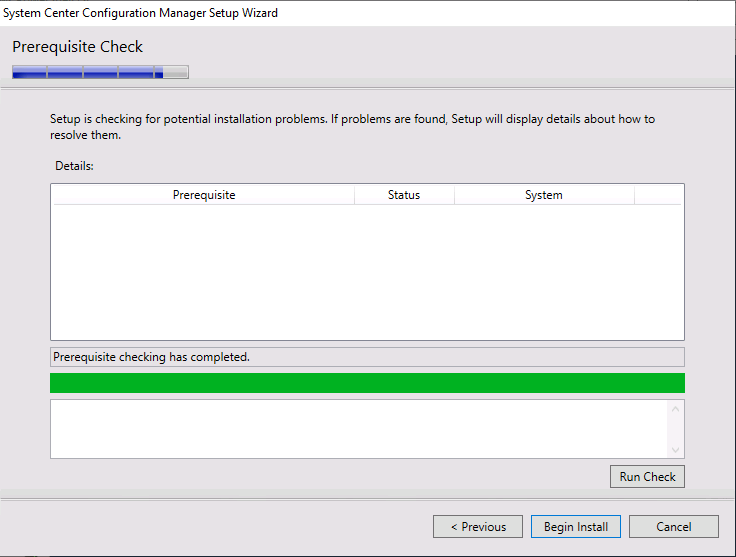
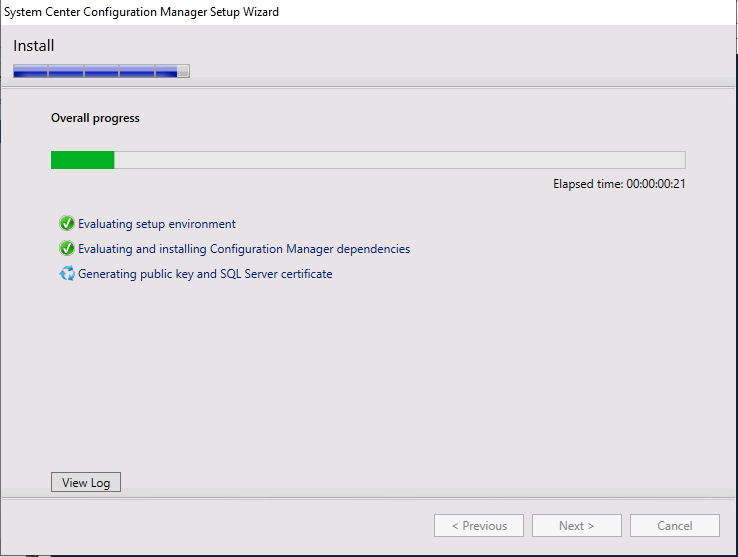
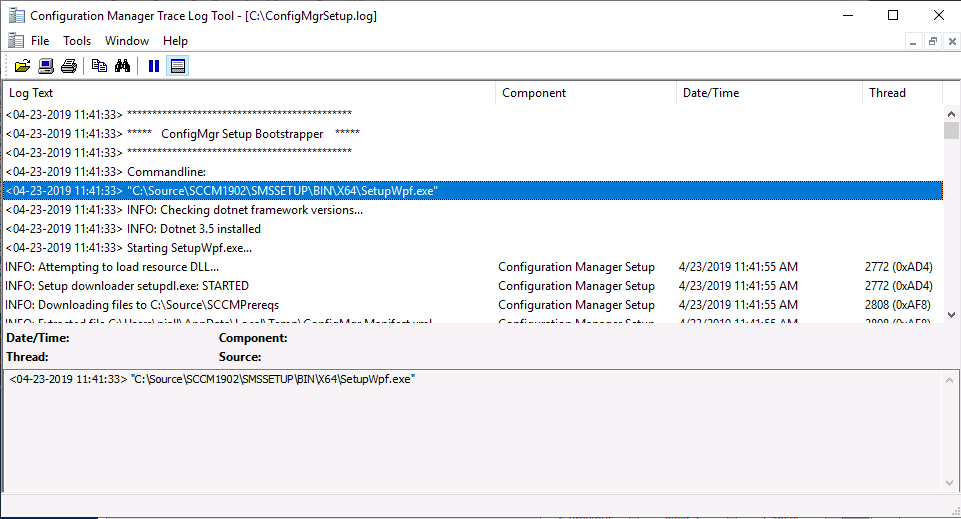
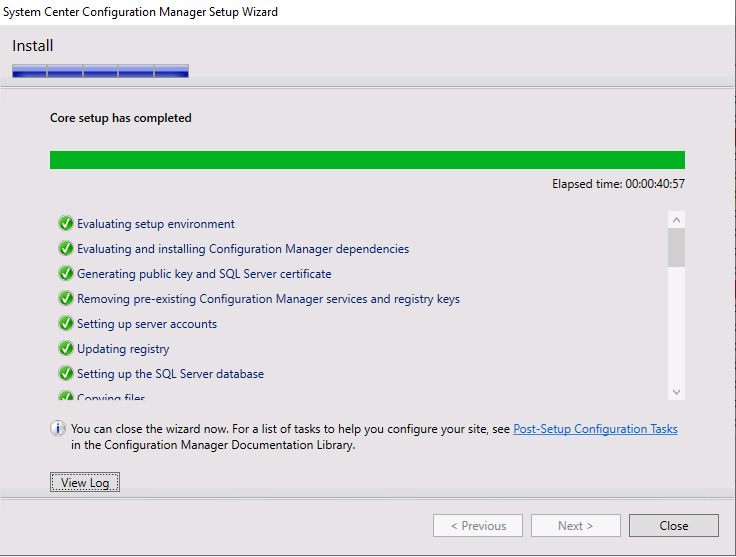
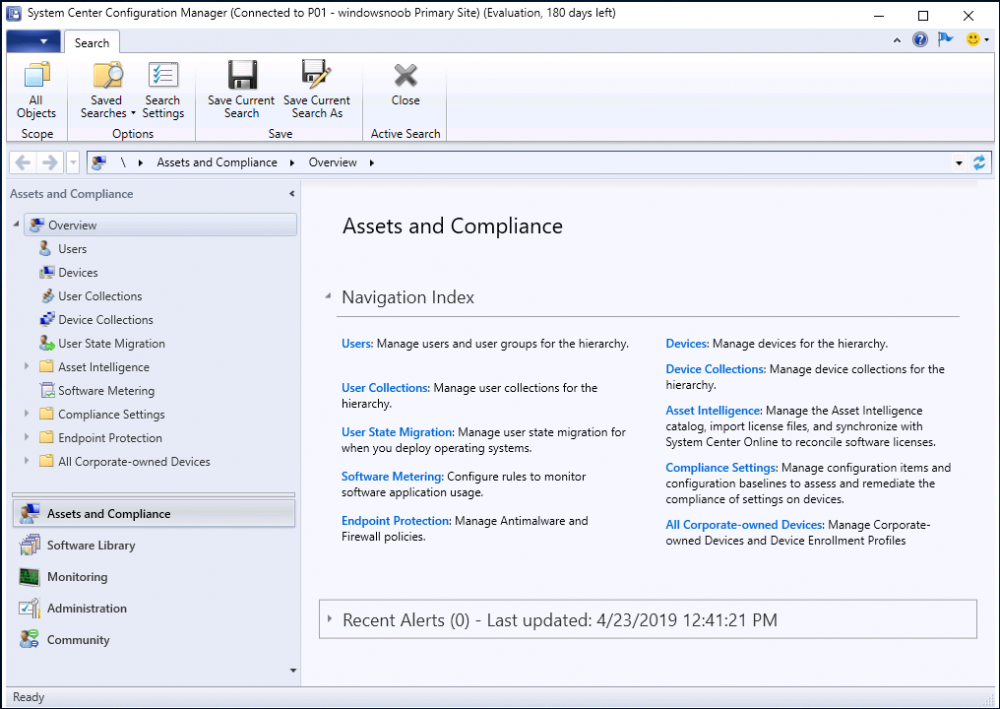
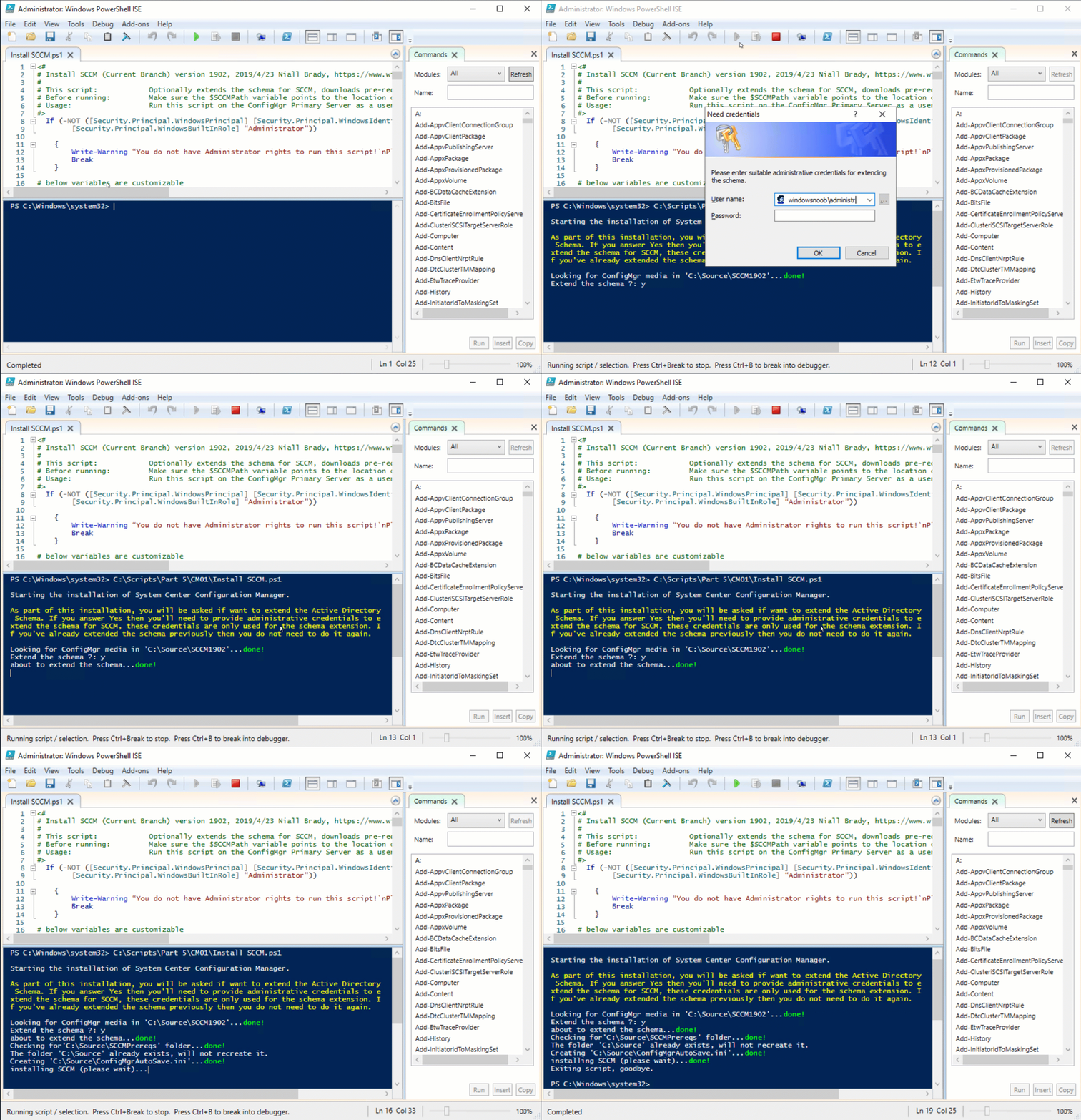
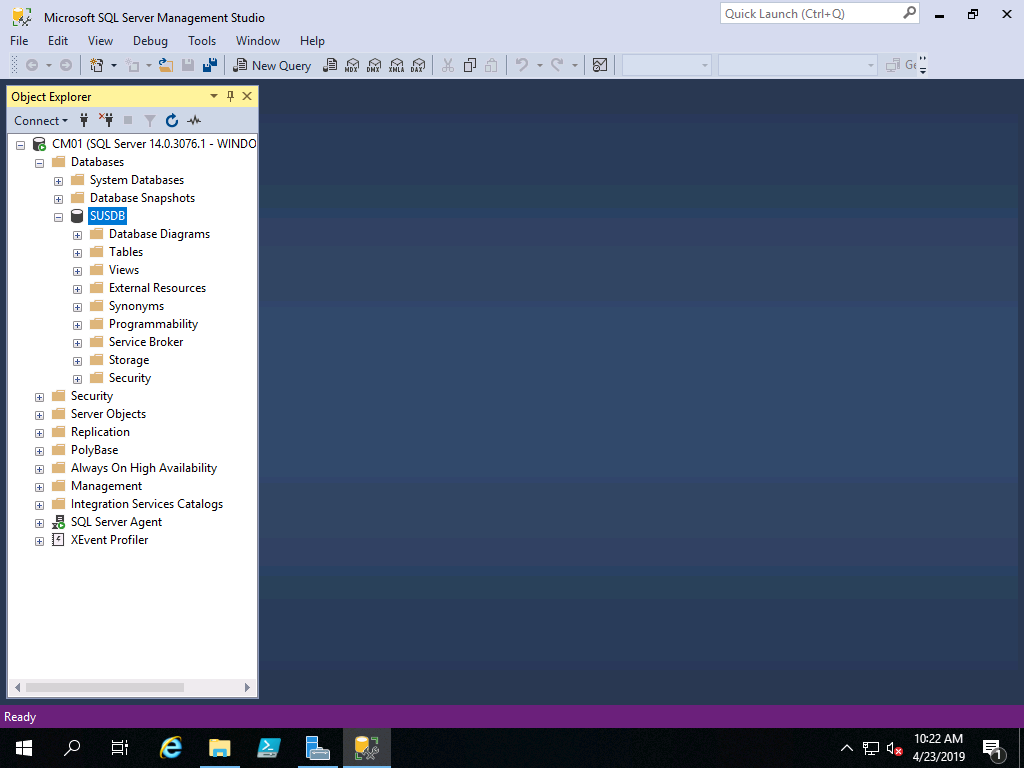
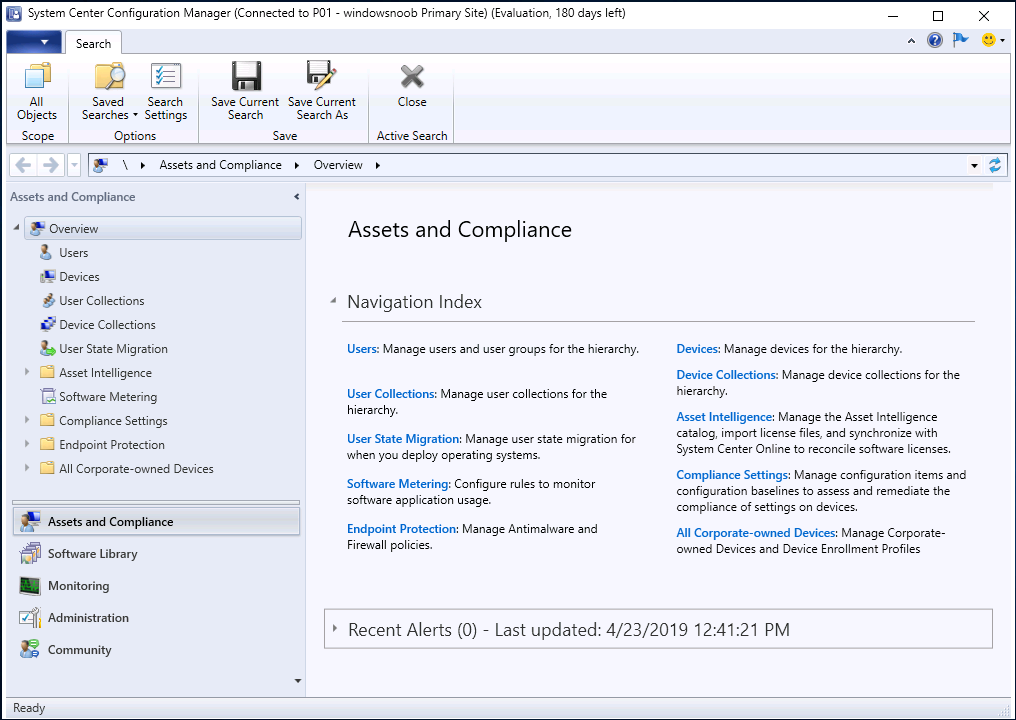
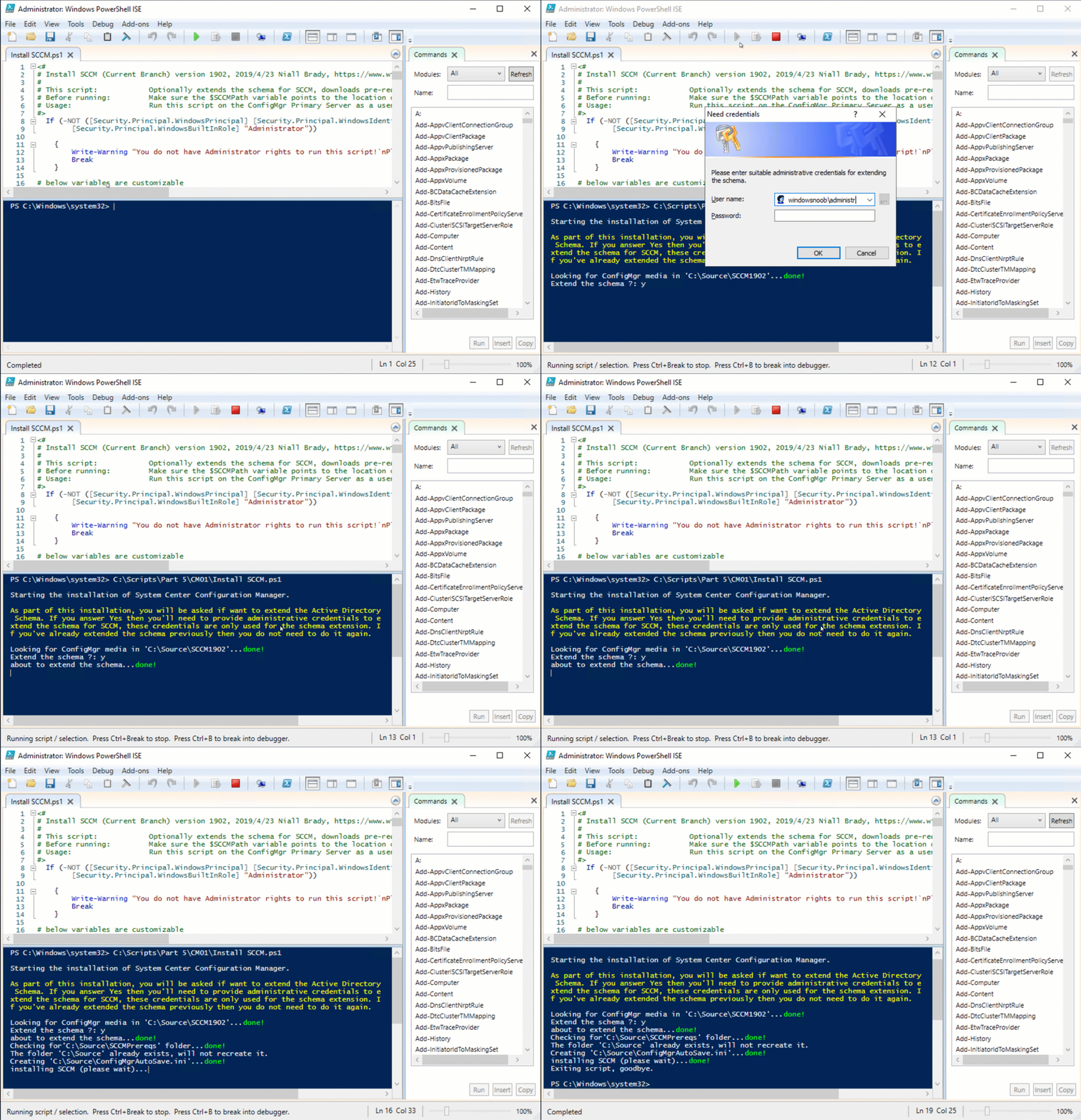
Introduction This multi-part guide will show you how to install the latest baseline version of Configuration Manager from Microsoft. The latest available baseline version is System Center Configuration Manager (Current Branch) version 1902 as of April the 10th 2019. I blogged how to upgrade to 1902 here. This guide is aimed a new installations of SCCM. Baseline media is used to install new ConfigMgr sites or to upgrade from supported versions, for more information about baseline media please see my blog post here. This series is broken down into the following parts:- Part 1 - Get the lab ready, configure ADDS Part 2 - Join CM01 to Domain, add users, create the Systems Management container, delegate permission Part 3 - Role and Feature installation, installation of WDS and ADK Part 4 - Configure and install SQL Server 2017 Part 5 - Configure and install SCCM 1902 Current Branch (This part) Part 6 - Create device collections Part 7 - Configuring discovery Part 8 - Configuring boundaries You can use this multi-part guide to get a hierarchy up and running on Windows Server 2019 using SQL Server 2017. The concept behind this is to guide you through all the steps necessary to get a working Configuration Manager Primary site installed (for lab use) using manual methods or automated using PowerShell. This gives you the power to automate the bits that you want to automate, while allowing you to manually do other tasks when needed. You decide which path to take. PowerShell knowledge is desired and dare I say required if you are in any way serious about Configuration Manager. I will show you how to do most steps via two methods shown below, it's up to you to choose which method suits you best but I highly recommend automating everything that you can, using PowerShell. Method #1 - Do it manually Method #2 - Automate it with PowerShell Downloads The scripts used in this part of the guide are available for download here. Unzip to C:\Scripts. The scripts are placed in the corresponding folder (Part 1, Part 2 etc) and sorted into which server you should run the script on (DC01 or CM01). Scripts.zip Step 1. Restart the Configuration Manager Primary Server Note: Perform the following on the Configuration Manager server (CM01) as a Local Administrator Open an administrative command prompt and issue the following command: shutdown /r This will restart the server, which is a good idea after having just installed SQL Server 2017. Step 2. Install the WSUS role Note: Perform the following on the Configuration Manager server (CM01) as a Local Administrator Now that SQL server is installed (and the server is rebooted, you did reboot it didn't you ?), you can utilize that SQL Server installation for the Windows Server Update Services (WSUS) database instead of the default WID (Windows Internal Database). To install WSUS and configure it to use the SQL server database instead of the Windows Internal Database, do as follows: Method #1 - Do it manually Using Roles and Features in Server Manager, add the Windows Server Update Services role. When prompted to add features for the WSUS role, click on Add features. When prompted for the Role Services, remove WID Connectivity by unchecking that box, and add SQL Server Connectivity instead. When prompted for Content location, enter a valid path When prompted for Database Instance Selection, enter the server name and click on Check Connection On the Confirm Installation Selections screen, click on Install. and finally click Close. After installing the WSUS role, in Server Manager, click on the yellow exclamation mark and choose Launch Post Installation Tasks. When the tasks are completed The WSUS database (SUSDB) can now be observed using SQL Server SSMS. Method #2 - Automate it with PowerShell Browse to the location where you extracted the scripts, C:\scripts. Start Windows PowerShell ISE as administrator, open the Install roles and features_WSUS.ps1 script, edit the $servername variable and replace CM01 with the ServerName your are installing ConfigMgr on (SQL server). Note: Make sure to have your Windows Server 2019 media in the path referred to by $Sourcefiles. 1. Extract the scripts to C:\Scripts on CM01 and load the Install roles and features_WSUS.ps1 script located in C:\Scripts\Part 5\CM01 2. Edit the variables [lines 22-25] as desired before running. 3. Start Windows PowerShell ISE as Administrator and run the script by clicking on the green triangle. Step 3. Download and extract the ConfigMgr content Before installing System Center Configuration Manager version 1902 you'll need to download the content as it is a baseline version. Normally you should download baseline versions of the ConfigMgr media from Microsoft's Volume licensing Service Center (VLSC) site for use in production or from MSDN (or the Microsoft Evaluation site) for use in a lab. Note: The SCCM 1902 Current Branch media is not yet available on MSDN or VLSC. When the new baseline media is released I'll update this note. In the meantime you can download the baseline media ISO from the Microsoft evaluation site here. This will be the same media that will make it's way to MSDN and VLSC. Once downloaded, extract the media to C:\Source\SCCM1902. Step 4. Download the ConfigMgr Prerequisites Note: Perform the following on the Configuration Manager server (CM01) as a Local Administrator You can download the prerequisites during ConfigMgr setup or in advance. As you'll probably want to install more than one copy of ConfigMgr (one lab, one production) it's nice to have the prerequisites downloaded in advance. Method #1 – Do it manually To do that, open an administrative PowerShell command prompt and navigate to the following folder: cd C:\Source\SCCM1902\smssetup\bin\X64 Run the following line .\SetupDL.exe C:\Source\SCCMPrereqs Note: You can find the CMTrace executable in the SMSSetup Tools folder in the location that you extracted the ConfigMgr media, eg: C:\Source\SCCM1902\SMSSETUP\TOOLS. Method #2 – Automate it with PowerShell To automate the download of the prerequisites simply follow the instructions and run the Install SCCM.ps1 Powershell script in Step 4 or use the Download SCCM prerequisite files.ps1. Step 5. Extend the Schema Note: Perform the following on the Domain controller server (DC01) as Administrator. You do not have to extend the Active Directory schema if it was already extended for Configuration Manager previously. Method #1 – Do it manually To do that, on the Active Directory domain controller (DC01), open Windows File Explorer and browse to the network path of the ConfigMgr server where you've copied the SCCM source, eg: \\cm01\c$\Source\SCCM1902\SMSSETUP\BIN\X64 In that folder, locate extadsch.exe and right click, choose Run as Administrator. After the schema has been extended for SCCM, you can open C:\ExtAdsch.log on the root of C:\ on the server you are performing this on, and review the success or failure of that action. Method #2 – Automate it with PowerShell To automate extending the schema, use the Extend the Schema in AD.ps1 PowerShell script. Run the script on the CM01 server using credentials that have the ability to extend the schema. Step 6. Install SCCM Current Branch (version 1902) Note: Perform the following on the ConfigMgr server (CM01) as Administrator. Method #1 – Do it manually Note: Please restart the server before beginning the installation. Open an administrative command prompt and issue the following command: shutdown /r After restarting the Configuration Manager server (CM01), open Windows File Explorer and browse to the network path of the ConfigMgr server where you've copied the SCCM source, eg: C:\Source\SCCM1902\ In that folder, double click on splash.hta. The Installer appears, click on Install. At the Before You Begin screen click Next. In the Available Setup Options screen, place a checkbox in "Use typical Installation options for a stand alone primary site" When prompted if you want to continue click Yes. On the Product Key screen enter your Key (or choose the eval option), and set the Software Assurance Date (optional), if you want to change from Eval to Licensed later see this post. On the Product License Terms screen, select the 3 available options and click Next. On the Prerequisite Downloads screen, select the first option and specify C:\Source\SCCMPrereqs as the folder to download the prerequisite files. Click Next to start the download. On the Site and Installation Settings screen, enter your chosen site code (eg: P01), your site name and the path where you want to install ConfigMgr. On the Diagnostics and Usage data screen, click Next. On the Service Connection Point Setup screen, enter your choices and click Next. On the Settings Summary, review your choices and when happy with them click Next. On the Prerequisite Check screen click Begin Install when ready or review any warnings/errors as appropriate. Note: If you get an warning about TLS 1.2 see this blogpost and verify you've downloaded the latest version of my Install SQL Server 2017.ps1 PowerShell script dated 2019/4/28. If you also see a warning about the site server not being able to publish to the System Management container, you can safely ignore that as long as you did indeed delegate permissions and create the system management container. I think it's a bug and I'm getting verification from the Product Group. The installation starts... During the installation, click on View Log (opens C:\ConfigmgrSetup.log) to review the installation progress (Tip: associate logs file with CMTrace to review the installation details live) and when the installation is done, click Close. Method #2 – Automate it with PowerShell Open an administrative command prompt and issue the following command: shutdown /r This will restart the server (which is a good idea as you might get red-herring messages about SQL server settings otherwise). To automate the installation of SCCM 1902 (including all the previous steps above), simply run the Install SCCM.ps1 PowerShell script. Run the script on the CM01 server and when prompted to extend the schema, enter your choice (yes or no) and if you choose to extend the schema, provide suitable credentials when prompted (Domain Administrator will do). Once done with the schema extension, the installation will continue (as shown below). and once installed you can launch the console. Success ! Please join me in Part 6 where you'll create some device collections for Windows 10 OSD and Windows As A Service.